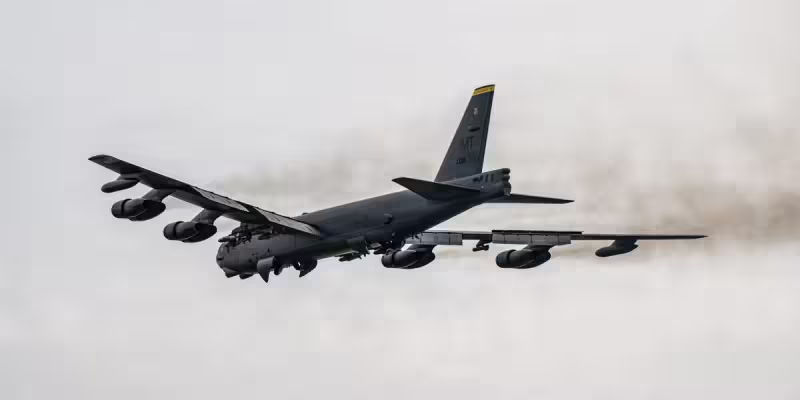
The U.S. military has started conducting the first overland B-52 missions over Iran, a new phase in the air campaign that comes after 30 days of intensified strikes. Gen. Dan Caine said Tuesday that the military had struck more than 11,000 targets in that span.
“Over the past 30 days, we've struck more than 11,000 targets,” Caine said. “Given the increase in air superiority, we've successfully started to conduct the first overland B-52 missions, which allow us to continue to get on top of the enemy.”
The B-52 Stratofortress is one of the most enduring aircraft in the U.S. fleet. It first entered service in the 1950s, has been flying for more than 70 years, and the Air Force still has 72 active B-52s. The service plans to keep the bomber operational until 2050, even as it remains capable of nuclear operations in some configurations.



Read Also: B52 bomber declares emergency after leaving RAF Fairford for Iran-linked mission
The timing matters because the mission shift follows a long stretch in which the U.S. and Israeli forces have been degrading Iranian air defenses while using cyber, space and electronic warfare assets during the war. The B-52 is a Boeing-made heavy long-range strategic bomber, but it lacks the speed and stealth of the B-1 Lancer and B-2 Spirit. Its appearance over Iran suggests that campaign conditions have changed enough to allow a slower, older bomber to operate deeper in the fight.
The aircraft is also in the middle of a modernization push intended to keep it viable into midcentury. Boeing received a more than $2 billion contract last December for the Commercial Engine Replacement Program, and the first ferry flight of a B-52 with a new radar also took place last December. The Radar Modernization Program is designed to give the bomber greater range and make it harder to disrupt with electronic warfare countermeasures.
For now, the larger question is not whether the B-52 can still fly, but how far the U.S. intends to push a bomber built in the Cold War and now being sent into a very different one. Retired B-52s are kept in long-term storage at the Air Force's boneyard in Arizona, yet the active fleet is being extended toward 2050, a sign that Washington still sees a role for the aircraft in high-intensity conflict.