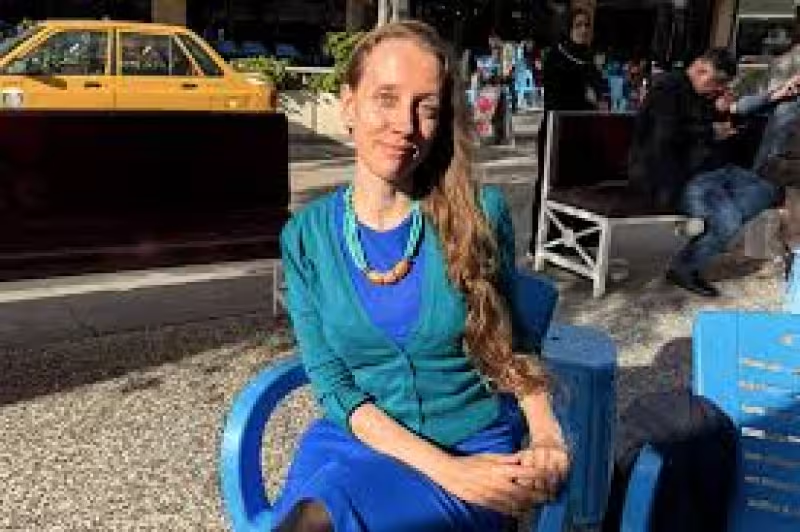
American freelance journalist Shelly Kittleson was released in Baghdad on Tuesday, ending a weeklong kidnapping that began when she was taken from a Baghdad streetcorner last week. An Iraqi official with direct knowledge of the situation said she was freed in the afternoon.
Kataib Hezbollah said earlier in the day that it had decided to free Kittleson, 49, after abducting her on March 31. The militia said the move was made “in appreciation of the patriotic stances of the outgoing prime minister” Mohammed Shia al-Sudani and added that “this initiative will not be repeated in the future.” It also said Kittleson must “leave the country immediately” once released.
The release came after days of uncertainty and shifting signals from Iraqi authorities. Three Iraqi officials said earlier Tuesday that attempts to negotiate Kittleson’s freedom had run into obstacles. An official with the Popular Mobilization Forces had been assigned to communicate with the abductors, while one security official said Kataib Hezbollah leaders had vanished and gone underground. A political official said a message had been sent to the group’s leadership to learn what it wanted in exchange for the journalist.
Iraqi officials said Kittleson was seized by two cars, and that one crashed while being pursued near al-Haswa in Babil province southwest of Baghdad before she was moved to a second car that sped away. Two militia officials said several members of Kataib Hezbollah who had previously been detained by Iraqi authorities would be released in exchange for Kittleson.
The abduction drew immediate attention because U.S. and Iraqi officials had previously pointed to Kataib Hezbollah in connection with it. The group is a powerful Iran-backed militia that is nominally under the control of the Iraqi military through the Popular Mobilization Forces coalition, a structure that has long complicated Baghdad’s dealings with armed factions operating inside the state.
Kittleson had lived abroad for years before the kidnapping and had used Rome as her base for a time. She built her journalism career across the Middle East, especially in Iraq and Syria, often working on a shoestring budget and without the protections enjoyed by large news organizations. U.S. officials said they had warned her multiple times about threats against her before she returned to Iraq.
For Kittleson, the release closes a perilous chapter but not the larger problem that put her in it. She was taken in the heart of Baghdad, held for days and then handed back only after a public declaration from the militia accused in her disappearance. That is the measure of how fragile the safety net remains for freelance reporters working in iraq.