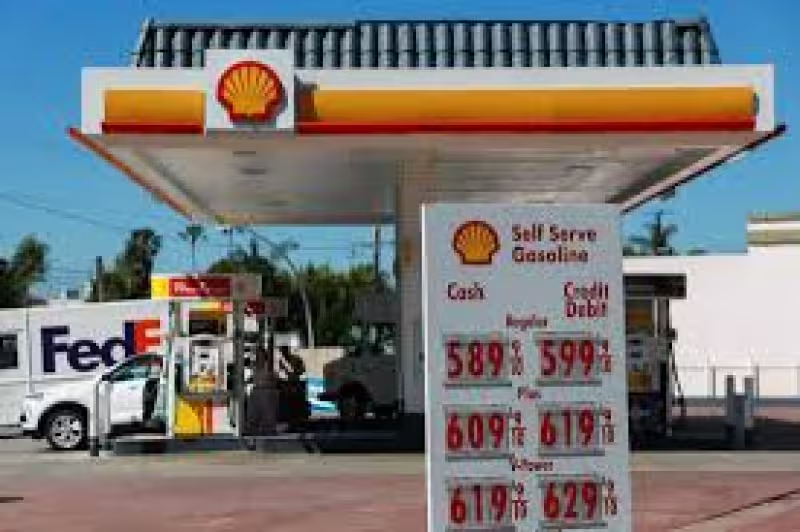
The national average price for a gallon of regular gasoline fell 7 cents over the past week to $4.09 on April 16, 2026, even as drivers used more fuel and crude oil stayed below $100 a barrel. That drop came after last week’s announcement of a two-week ceasefire between the U.S. and Iran, which helped keep oil markets from pushing sharply higher.
Gasoline demand rose from 8.56 million barrels per day to 9.08 million last week, while total domestic gasoline supply fell from 239.3 million barrels to 232.9 million. Gasoline production increased and averaged 9.8 million barrels per day, a sign refiners were still feeding the market even as inventories tightened. The week ended with WTI up 0.01 cent at $91.29 a barrel in Wednesday’s formal trading session.

The crude market has remained sensitive to the ceasefire and to the still-unresolved security picture around the Strait of Hormuz, where maritime traffic has stayed subdued as regional tensions have not fully eased. The Energy Information Administration said crude inventories fell by 0.9 million barrels from the prior week, leaving U.S. stocks at 463.8 million barrels, about 1% above the five-year average for this time of year.
That balance has not translated evenly at the pump. California had the nation’s most expensive gasoline at $5.86 a gallon, followed by Hawaii at $5.65 and Washington at $5.38. At the low end, Oklahoma averaged $3.43 and Kansas $3.50. The national average price at a public EV charging station held steady at 41 cents per kilowatt hour, underscoring how uneven the cost of transportation remains across the country.
The immediate question for drivers is whether the recent pullback can last. With crude still below $100 and gasoline supplies shrinking, the next move will hinge on whether demand cools, refinery output holds and the ceasefire keeps pressure off the Strait of Hormuz.