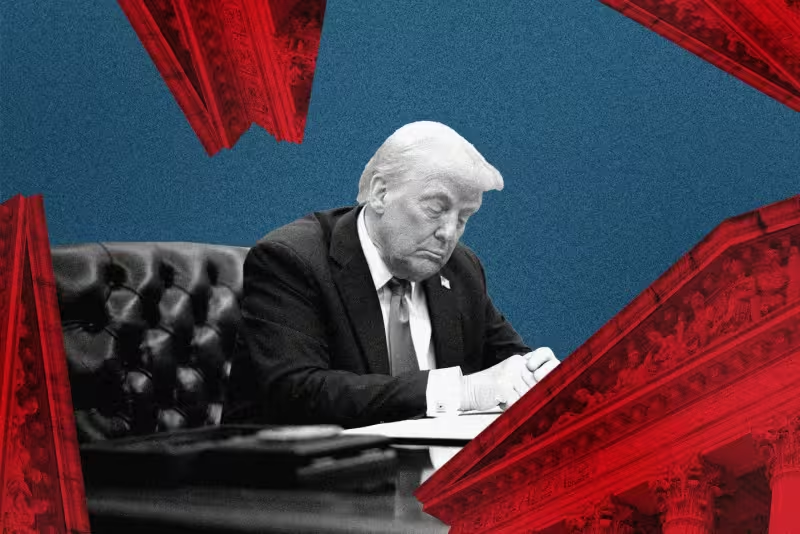
President Donald Trump has issued about 1,600 pardons since the start of his second term, and now he is telling aides he may use that power for them, too. Last week, the reported that Trump told his staff he would issue preemptive pardons in 2028 before leaving the White House.
The scope is striking even by Trump’s standards. The estimated that he issued six times as many pardons and commutations in the first 15 months of his second term as he did in his first term, when he granted fewer than 250 pardons and commutations. That includes pardons for Jan. 6 rioters, people who helped subvert the 2020 election for him, and a crypto billionaire charged with a felony. In one line that captures the mood around the West Wing, Trump has said, “I will pardon anyone who came within 200 feet of the Oval Office.”


The article frames this as something broader than clemency for allies. Administration officials told the Journal that Trump has repeatedly raised pardons with White House aides and other administration officials when staff suggested they could face prosecution or congressional investigations over decisions. The Journal described him as having “raised the specter of pardons with White House aides and other administration officials, particularly when staff have suggested they could face prosecution or congressional investigations over decisions.” The message is plain: the pardon power is not just being used after the fact, but as a shield and, at times, as a form of pressure.
That leaves Congress with little leverage. Supreme Court rulings have affirmed the presidential pardon authority as unlimited, with the only exceptions being impeachment and state criminal offenses. That legal backdrop helps explain why Trump’s use of the power has become so expansive and why the possibility of future pardons for aides has become part of the political conversation, not just a legal one. Related coverage: Trump Mass Pardons: Report says advisers could get Oval Office clemency and Trump Pardons reported in White House jokes about sweeping staff clemencies.
So the answer to the question raised by the latest report is yes: Trump is not only using pardons aggressively today, he is signaling that he may use them ahead of time to protect people around him in 2028. For aides and officials who work in his orbit, that turns clemency into a standing offer — and a warning.