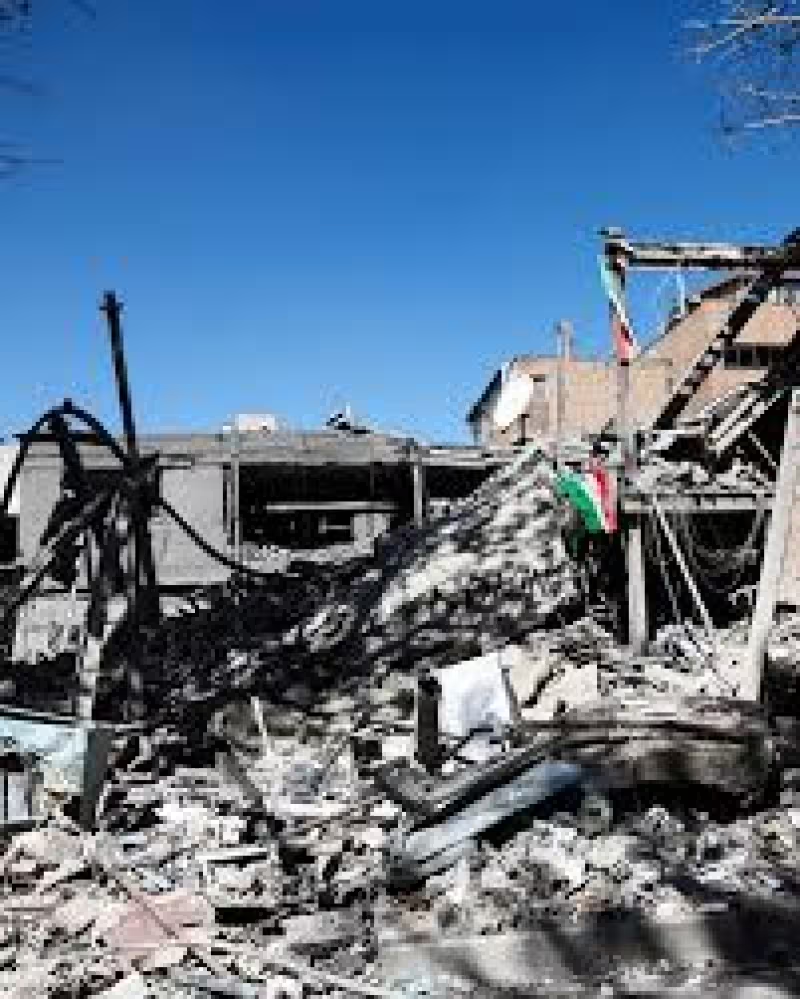
President Donald Trump set an 8 p.m. ET deadline Monday for Iran to reopen the Strait of Hormuz, then said the United States would begin targeting Iran's power plants and bridges on Tuesday if Tehran did not comply.
The warning landed after Trump rejected Iran's 10-point plan as “not good enough” and after Iran turned down U.S. proposals, deepening a confrontation that is already pushing fuel prices higher around the world.
Trump sharpened the threat on Truth Social, writing, “Tuesday will be Power Plant Day, and Bridge Day, all wrapped up in one, in Iran. There will be nothing like it!!! Open the F---in’ Strait, you crazy bastards, or you’ll be living in Hell - JUST WATCH! Praise be to Allah,” a post that underscored how quickly the standoff has moved from diplomacy to open threats against civilian infrastructure.
Read Also: Clash in Istanbul Near Israeli Consulate Leaves 3 Dead


The United Nations moved to push back. U.N. Secretary-General Antonio Guterres warned the Trump administration that attacking civilian infrastructure in Iran is prohibited under international law, and spokesman Stephane Dujarric said an attack on civilian targets would still be banned if it risked excessive incidental civilian harm. Dujarric said a court would determine whether strikes on power plants and bridges would amount to war crimes if Trump followed through.
The dispute has also turned sharply political in Washington. Rep. Ilhan Omar called Trump an “unhinged lunatic” in a Monday post on X and said, “This is not ok. Invoke the 25th amendment. Impeach. Remove. This unhinged lunatic must be removed from office,” while Sen. Mark Kelly warned that threatening power plants and other non-military targets is not strength. Sen. Jeff Merkley went further, calling Trump’s Easter threat to attack Iran’s civilian infrastructure “the words of a frustrated and immoral madman” and warning that military leaders are legally required to refuse orders to commit war crimes.
Read Also: Panama Canal bridge closed after tanker trucks explode in Panama City
Iran has so far rejected the U.S. peace proposals, and Trump's move to attach a hard deadline to the Strait of Hormuz fight leaves the White House facing the same dilemma it has created for Tehran: back down, or cross into strikes on infrastructure that the U.N. says international law forbids. The next move now belongs to Tuesday, and the risk is no longer only economic.