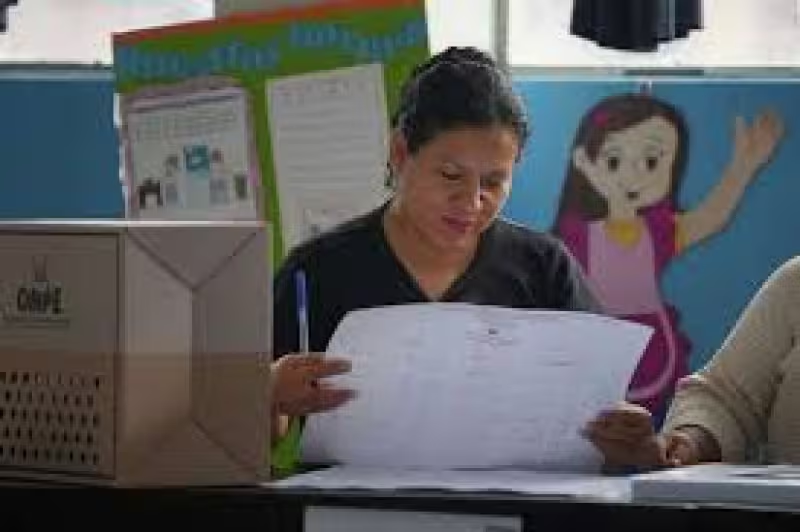
Peru’s vote count kept moving on Monday after general elections on Sunday, with the tally reaching 89% and Keiko Fujimori leading the field with 16.9% of the vote. Rafael López Aliaga and Roberto Sánchez were tied at 11.9% each, while Jorge Nieto had 11.17% and Ricardo Belmont was in fifth place with 10.15%.
The count came as election problems persisted in several polling places in the metropolitan area of Lima, where ballots did not arrive on Sunday. The National Jury of Elections reopened the affected centers on Monday so voters could cast ballots, while authorities said they would put presidential votes ahead of the parliamentary count. By then, the race had become a tight, fragmented contest that made predictions difficult and left the presidential outcome hanging on every new batch of returns.
The dispute over the process sharpened outside the count itself. The National Jury of Elections denounced Piero Corvetto to the Prosecutor's Office, while Annalisa Corrado said the European Union electoral observation mission dismissed the existence of irregularities. López Aliaga also denounced what he described as a “fraude electoral único en el mundo,” underscoring how quickly the result became part of a broader fight over trust in the vote.
That fight matters because Peru’s Congress can remove a president through vacancia presidencial if enough votes are gathered, and the country has had eight presidents in the last 10 years. The slow parliamentary count, delayed by the decision to prioritize the presidential result, only added to the sense that the country was still looking for a clear center of gravity after Sunday’s vote. The question now is not whether the count will continue, but whether the final numbers can settle a contest that is already being challenged before it is finished.