Americans are following local news less closely than they did a decade ago, even as they turn to more places to get it. In 2025, 21% of adults say they follow local news very closely, down from 37% in 2016, according to a Pew Research Center fact sheet released on the changing local media landscape.
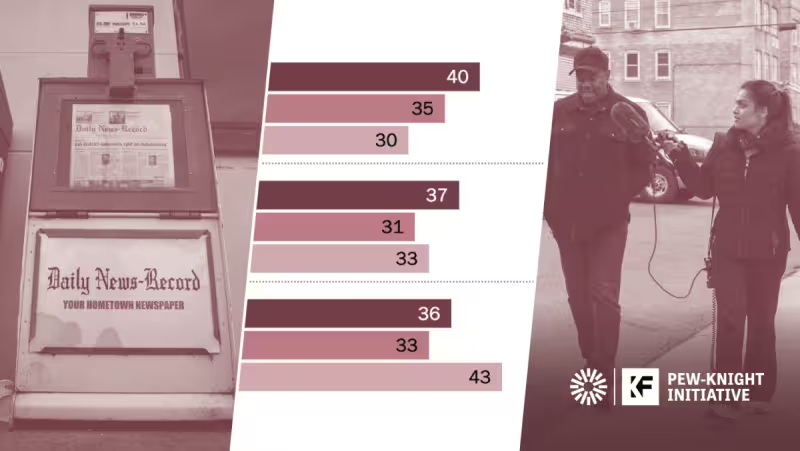
The numbers show a public that still relies on familiar outlets but no longer depends on them alone. In 2025, 65% of Americans say they at least sometimes get news from their local TV station, compared with 70% in 2018. Local daily papers reach 36% of U.S. adults at least sometimes, down from 43% in 2018, while 52% say they get local news from online forums or discussion groups, up from 38%. Another 40% say they get local news at least sometimes from local government agencies or officials, compared with 30% in 2018, and 42% say they use online-only sources not counted in other categories, up from 15%.
That shift is part of a broader change in how Americans encounter local information. The fact sheet, which looks at data beginning in 2016, is part of the Pew-Knight Initiative, a research program funded jointly by The Pew Charitable Trusts and the John S. and James L. Knight Foundation. It reflects a media environment in which traditional local news sources such as TV and radio remain common, but digital channels now sit alongside them as everyday habits.



The change is not just about platforms. About three-quarters of Americans, 72%, say they often or sometimes get news from other local residents, up from 66% in 2018. A 2024 Pew Research Center study found that when people get local news that way, it most commonly comes by word of mouth. That puts neighborhood conversation, not just institutional reporting, at the center of the local news ecosystem.
Even TV, long the dominant local source, is fragmenting. In 2025, 34% of U.S. adults say they prefer television more than any other path to local news, down from 41% in 2018. Among those who get news from local TV, 56% say they mainly turn to a station on traditional television, while 43% say they primarily get that news online through a website, app, emails or social media posts. In 2018, 76% of local TV news consumers primarily used a television set for that news.
For local news organizations, the picture is clear: audience loyalty is weaker, the audience is spread across more channels, and the old assumption that the local paper or station is the first stop no longer holds. The people most likely to stay connected are no longer doing it in the same place, or in the same way, and that is the story the new numbers tell.