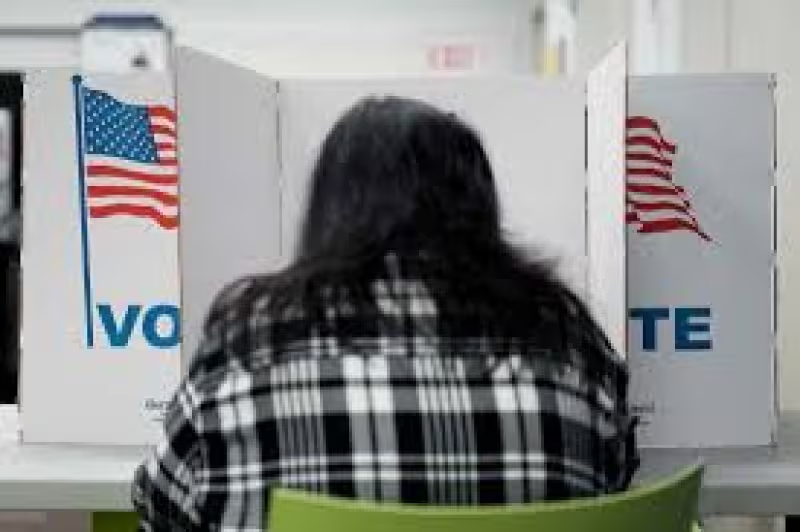
Virginia signed the national popular vote bill into law, joining an interstate compact with 17 other states and the District of Columbia that would award presidential electors to the winner of the national vote instead of the winner in each state. With Virginia added, the compact now has 222 electors, still short of the 270 needed to take effect.
The move adds another state to a campaign that has stretched across the 21st century and keeps the focus on a system that has twice in the past four presidential elections sent the White House to a candidate who lost the popular vote. George W. Bush won in 2000 despite losing the national vote, and Donald Trump did the same in 2016.


Supporters say the compact is meant to end that mismatch. John Koza, a leading advocate, has said the effort will continue state by state until the candidate who wins the most popular votes is elected president and every voter is treated equally in every presidential election. Christina Harvey said the presidency should be won by the candidate who receives the most votes nationwide, not just the right combination of battleground states, and that the latest action brings the country one step closer to a system where Americans’ votes for president and vice-president count equally, no matter where they live.
The push lands in a political environment where the idea has broad public support but not enough, yet, to rewrite the rules. Pew Research Center reported in 2024 that 63% of Americans would replace the electoral college with a national popular vote for president, while 35% opposed changing it. California, New York and Illinois are among the states that have already enacted the compact, and every state to do so so far has had Democratic electoral majorities.
That split is part of why the compact has made progress without crossing the finish line. The legislation has been introduced in enough states to reach the 270-elector threshold, including Arizona, Michigan, Nevada, New Hampshire, Pennsylvania and Wisconsin, but even if that mark is reached the pact would likely face intense legal scrutiny. For now, Virginia’s decision moves the virginia national popular vote compact closer to activation while leaving the larger fight over how presidents are chosen unresolved.