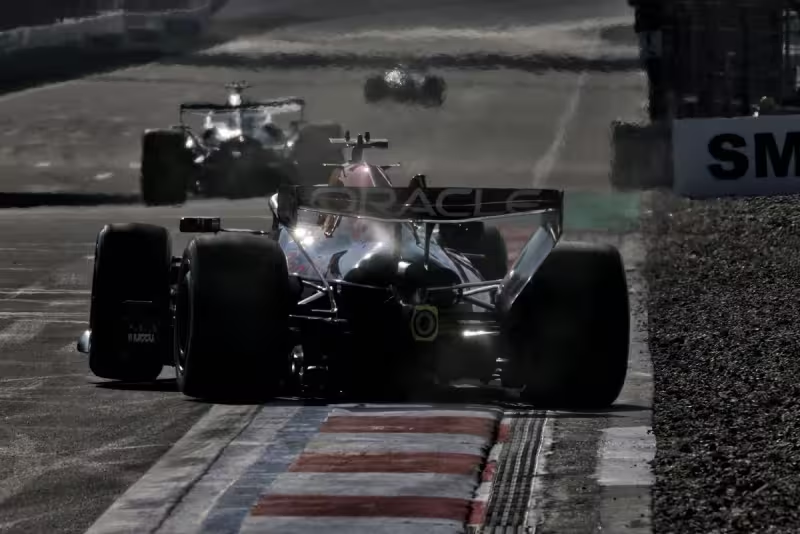
Formula 1’s senior technical figures held their first meeting on changes to the 2026 rules last Thursday, opening an early review of a formula that is already being reconsidered after just three races. Further talks are set to continue with stakeholders over the rest of the month, and by the time the season resumes in Miami in May, F1 2026 is likely to have a different set of rules governing at least one key competitive part of the race weekend.
The issue at the center of the discussion is the switch to a near 50/50 split between internal combustion engine power and electric power, a balance that has been under scrutiny for years. The most compromised parts of 2026 are now being examined for possible improvement, even though the heart of the problem is not expected to change any time soon.
The shape of the future engine rules was being discussed openly as far back as 2020, when competitors in Formula 1, including Mercedes, and the FIA referenced electrification as a realistic goal. FIA technical director Gilles Simon said then that working on the electric part would be an important aspect of the 2026 powertrain, and added that electrification was a topic everyone was talking about. By the end of that year, private internal meetings had taken place, followed in 2021 by CEO-level conversations with engine manufacturers already in F1 and with representatives from the Volkswagen Group, Audi, Porsche, Ford and Honda.



That framework rested on cost control, sustainability and electrification, but it also depended on removing the MGU-H. Audi said it would not proceed with its F1 plans unless the device was dropped, while Mercedes was willing to compromise on losing it in return for limits on extra dyno time and cost cap assistance for new manufacturers. To make up for the loss of the MGU-H and increase the electric component, the MGU-K was uprated to 350 kilowatts of peak power output, while internal combustion engine power was brought down to around 400 kilowatts, creating what was described as a sort-of 50/50 engine. Even so, the MGU-K can only be used at full 350 kilowatts for a very short period across a lap.
That is why this latest round of talks matters so early in the cycle. The rules were designed around a difficult compromise, and the compromise is already being revisited before the cars have even appeared under race conditions. Fred Vassar put the competitive risk bluntly: whatever is changed will have an impact in some way on the pecking order.
For now, Formula 1 is not rewriting the entire 2026 package. It is probing the pieces most likely to cause trouble and testing where change might still be possible. The result, by Miami in May, may be a revised balance in at least one crucial part of the weekend, but the central tug between combustion and electrification remains the issue shaping everything that follows.