In the fall of 2023, Ilya Sutskever sent secret memos to three fellow members of OpenAI’s board of directors as the company’s leaders faced weeks of furtive internal debate over whether Sam Altman and Greg Brockman were fit to run the startup. The memos landed at a moment when the board was weighing not just management style, but whether the company’s chief executive could be trusted with the kind of technology OpenAI had been built to control.
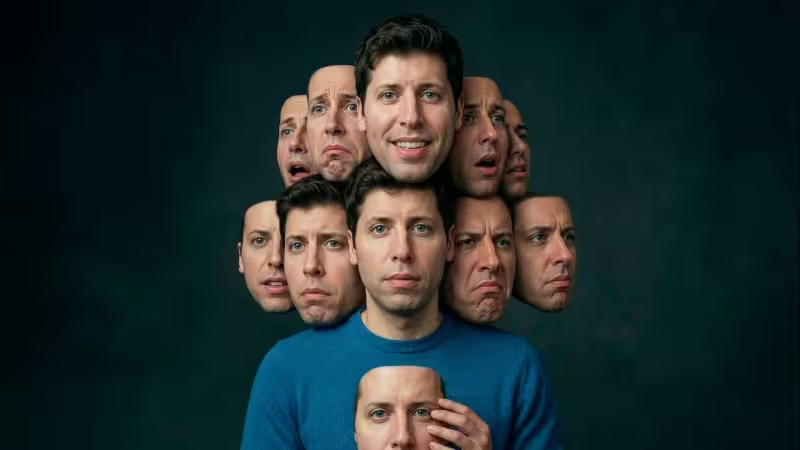
One of the memos on Altman began with the line that he exhibits a consistent pattern of lying. Another alleged that he misrepresented facts to executives and board members and deceived them about internal safety protocols. Helen Toner and Tasha McCauley received the material as confirmation of their concerns, according to the records, and the board’s private deliberations soon moved toward a decision that would break the company open. Sutskever had even officiated Brockman’s wedding at OpenAI’s offices in 2019, with a robotic hand serving as the ring bearer, a detail that made the rupture feel personal as well as institutional.
When Altman was in Las Vegas attending a Formula 1 race, Sutskever invited him onto a video call with the board and read a brief statement telling him he was no longer an employee of OpenAI. The board later told the public that Altman had been removed because he was not consistently candid. That judgment mattered because OpenAI was established as a nonprofit with six board members and a duty to put the safety of humanity ahead of the company’s success or survival, and the board had the power to fire the CEO if he was not reliable.
Read Also: Sam Altman home attack suspect arrested after threats at OpenAI HQ
The deeper tension was always built into the structure. OpenAI’s founders said they needed an unusual setup because artificial intelligence could become the most powerful and potentially dangerous invention in human history. That is why the memos and the board discussions centered on internal safety protocols and Altman’s credibility rather than a simple management dispute. Sutskever, who had helped usher the company through its rise, later put the burden in stark terms, saying that any person working to build this civilization-altering technology bears a heavy burden and is taking on unprecedented responsibility.
Read Also: Molotov Cocktail Suspected in Fire Outside Sam Altman’s San Francisco Home
What followed was not the clean exercise of governance the nonprofit model promised, but a clash between trust, secrecy and power inside one of the world’s most closely watched artificial intelligence companies. The board had the authority to act. The question those memos forced it to answer was whether it still believed the man running OpenAI deserved the button.