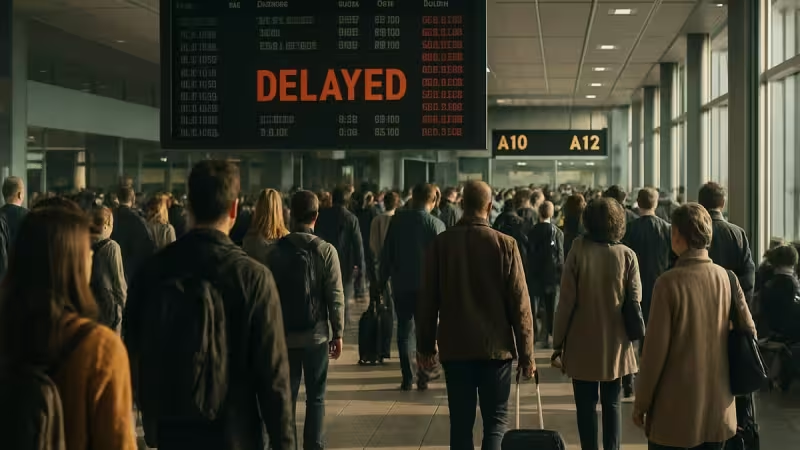
Flight delays at San Diego International Airport on April 12 rippled through the U.S. air system, leaving travelers with missed connections, extended layovers and last-minute rebookings at major hubs. Publicly available flight tracking data showed several dozen delayed departures and arrivals at the airport, along with a small number of cancellations.
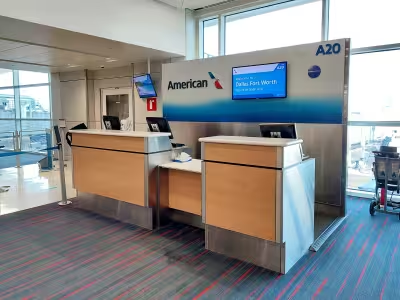
The disruption touched Southwest, United, Alaska and American flights, with many of the affected trips headed to Los Angeles, Dallas, Chicago and Denver. Travelers connecting through central and eastern hubs said aircraft arriving from Southern California were running late, pushing evening departures off schedule and forcing airlines to reshuffle plans as the day wore on.



The San Diego slowdown landed on top of a broader day of operational trouble across the country. Separate national delay statistics for April 12 showed heavy disruption at Chicago, Atlanta and Newark, while Dallas Fort Worth, Houston, Austin and San Antonio logged several hundred delays and multiple cancellations. Travel industry coverage said Dallas Fort Worth had already been under sustained operational strain for the previous 48 hours, and that disruptions from April 11 were still carrying into April 12 as airlines repositioned aircraft and crews.
That is why a relatively modest run of delays in San Diego mattered well beyond Southern California. As a West Coast origin and destination airport, San Diego International Airport can send problems downstream hours later, especially when a single-airport city feeds larger hub networks. The day’s pattern also fit a spring travel system already stretched by earlier storms in the Midwest and Northeast, leaving airlines with little room to absorb even limited schedule changes.
The immediate question for travelers is not whether the San Diego delays were large in isolation. They were not. The issue is how quickly a few dozen late arrivals and departures can become a wider network problem when aircraft and crews are already moving through a strained national schedule. On April 12, that chain reaction was already under way.