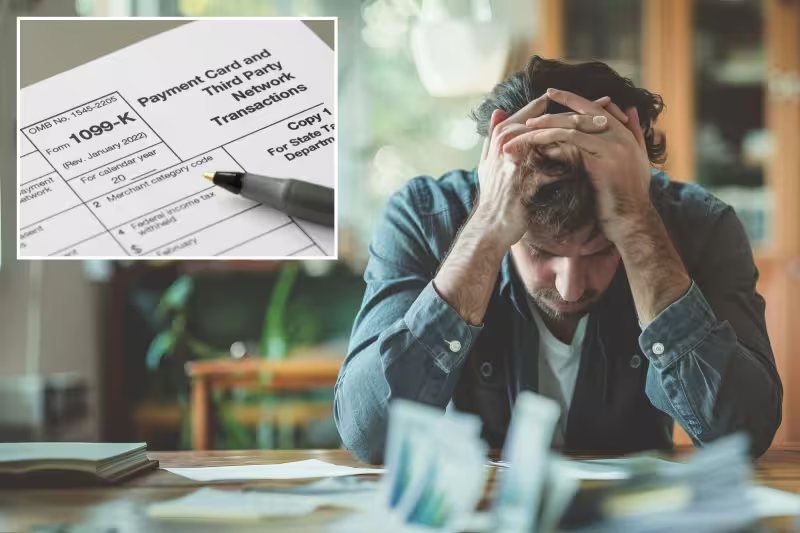
Millions of Americans are getting an unexpected IRS bill during tax season 2026 instead of a refund, and for many the surprise is an irs payment tied to 2025 taxes. The bills are landing because payment apps and state rules have turned ordinary side income into paper gains that the tax system treats as taxable.
For nearly four years, Congress threatened to lower the 1099-K reporting threshold to $600, and that threat was enough to send PayPal and Cash App forms to practically everyone as the rules kept shifting. Then in July 2025, Congress signed the One Big Beautiful Bill Act and rolled the federal threshold back to $20,000 and 200 transactions, but not before Maryland, Massachusetts, Montana, North Carolina, Vermont, Virginia and the District of Columbia had already kept enforcing a $600 state threshold, with Illinois at $1,000 and Missouri at $1,200.
TaxRise said its phones have not stopped ringing since February with people asking why they owe an unexpected tax bill. During tax season 2026, that confusion is showing up in mailed notices and online account balances as Americans discover that a form meant to track payments can look like income even when it is not.

Read Also: Meta Stock Jumps 4% as AI Ad Growth and PayPal Deal Lift Shares
The reason is buried in the form itself: the 1099-K reports gross revenue, not profit. Someone who bought a vintage couch for $800 and sold it for $500 would receive a form saying they made $500, even though they lost money on the deal. The IRS computer defaults to guilty until proven innocent, which means many filers now have to prove that the numbers on the form do not reflect actual taxable income.
That problem hits gig workers hardest because the IRS treats them as both the employer and the employee. They are also the ones most likely to be caught between federal and state thresholds that do not match, with one rule on the books in Washington and another at the state level. The result is a tax season that has turned a routine form into a bill people did not expect and, in many cases, did not owe in the first place.
The surprise bills are not a glitch. They are the predictable result of years of political whiplash, state-by-state exceptions and a reporting system that measures money moving through an app, not money left in a pocket. For millions of taxpayers, the task now is not just filing on time, but proving the IRS notice is wrong.