Voters in Virginia are deciding whether to approve a plan that could redraw the state’s congressional map and give Democrats a 10-1 edge in a delegation now split 6 Democrats and 5 Republicans across 11 districts. Early voting had already been underway for weeks before the April 21 special election, and the fight has pushed the state’s most populous county to the center of a partisan brawl.
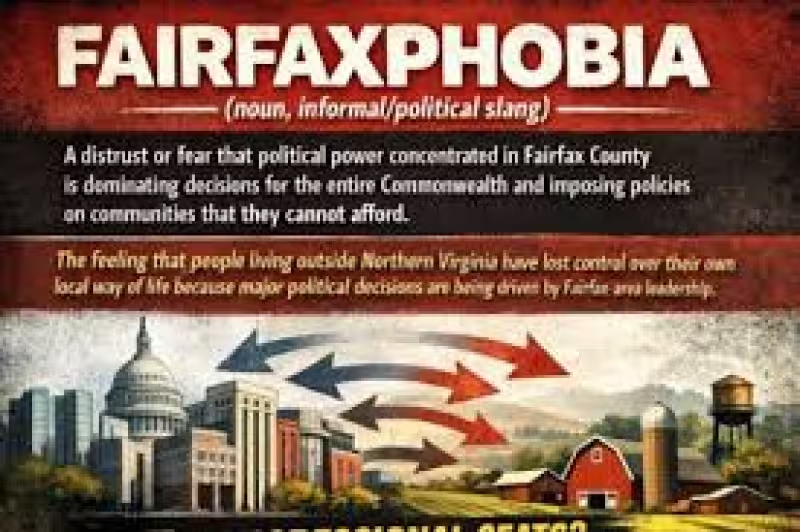
On Friday, Del. Wren Williams put a name to the fear driving some of the opposition: “Fairfaxphobia.” He said at least five districts would run up and split Fairfax County under the proposed map, adding that the change would eventually leave five sitting congressional members from Fairfax County. Williams also said, “We don’t want to be Fairfax County,” and described a preference for rural life over “skyscrapers.”
The redistricting plan is the latest flashpoint in a broader political struggle in Virginia, where Democrats say the effort is a response to President Donald Trump’s push for redistricting in Republican-led states. Opponents have framed the issue as a question of Fairfax County’s influence on the rest of Virginia, a theme that has shown up in signs reading “Don’t Fairfax Me” and “Vote No” in rural parts of the state.

Read Also: Jeannette Beres sues over alleged injury on Celebrity Reflection in grand foyer
Scott Surovell pushed back hard on that message on Friday, saying Fairfax County “does a lot for the entire state” and that “if it wasn’t for Fairfax, our state would have the economy of Mississippi.” His defense came as the anti-redistricting campaign continued to lean on New Vision VA, the political action committee that paid for and authorized the “Don’t Fairfax Me” signs and received a $25,000 donation from Dominion Energy.
People in Northern Virginia also see the dispute through a sharper social lens. Jeannette said the region is often viewed as “an anomaly” because of its more liberal lean, while Tiffany said the messaging sounded like an attack on a place that is “more educated, classy, professional, employed” and predicted voters there would back the plan. Ann, by contrast, said the proposal “should be a big ‘no’” because “it’s not right” and “it’s not fair to most Virginians.”
The vote on April 21 will not just decide a map. It will show whether Democrats can turn a redistricting fight into a political advantage, or whether the backlash in rural Virginia and beyond is strong enough to stop them.