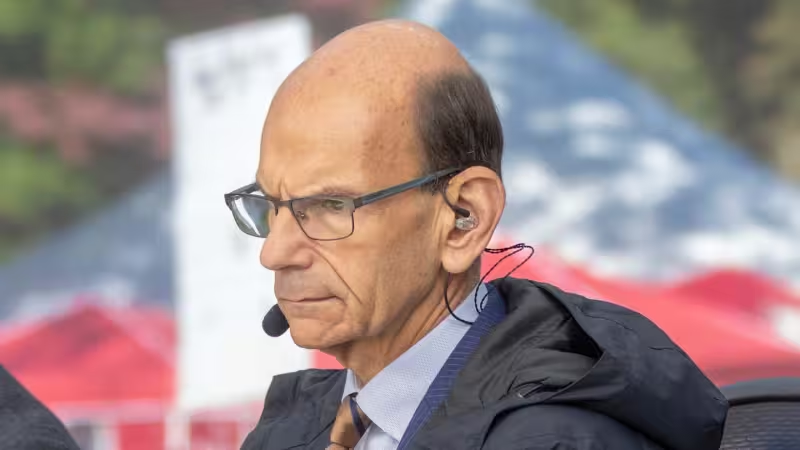
Paul Finebaum took aim at Miami’s place in the college football conversation, saying on his show that the Hurricanes had not been relevant for 25 years and that he had been promoting them for that entire stretch. The comment landed after Miami’s latest run back toward the top of the sport, a run that ended with a 27-21 loss to Indiana in the national championship game.
Miami has won five national championships, but its last title came in 2001. Since then, the Hurricanes have had only five double-digit win seasons, including two in the last two years. In 2024, they went 10-3 and likely would have reached the College Football Playoff if not for a late collapse against Syracuse in the regular-season finale. A year later, Miami went 13-3, earned a playoff berth without reaching the ACC Championship Game and beat Texas A&M, defending champion Ohio State and Ole Miss before falling just short against Indiana.



That sequence is why Finebaum’s criticism cuts against the backdrop of Miami’s recent surge. The program is still being measured against its championship standard, but it is also starting to look like more than a memory. Programs do not reach the national championship game by accident, especially in the expanded playoff era, and Miami’s path through a difficult bracket suggested the Hurricanes had moved back into the kind of territory where they can shape the sport rather than simply be judged by it.
Read Also: America Vs Nashville: Club América visits GEODIS Park in Champions Cup quarterfinal
The friction is obvious. Finebaum’s point was that Miami had spent a generation outside the center of the sport, and the long gap since 2001 gives that argument real weight. But the Hurricanes just put together a season that ended one step from the title, and that is not the profile of a program living on history alone. Whether Miami has fully changed its status is still open to debate; what is no longer in doubt is that the Hurricanes have forced their way back into it.