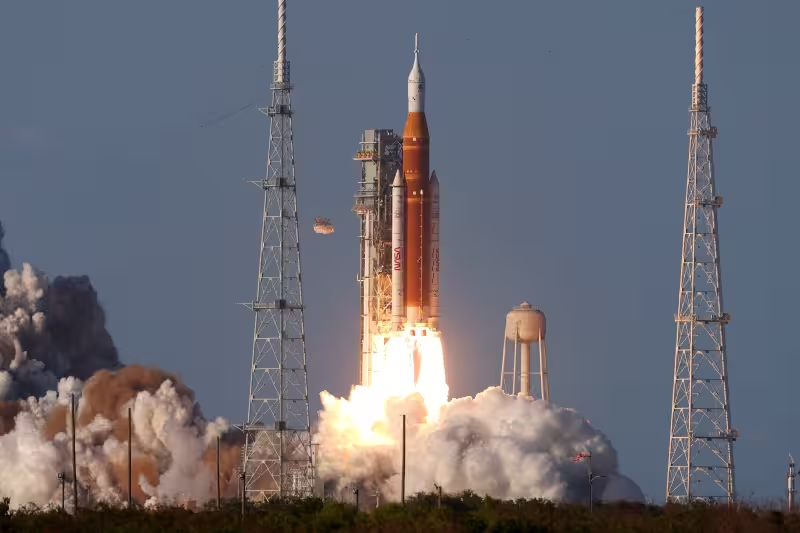
NASA’s Artemis II is a government-funded flyby mission meant to clear the way for future lunar landings, and it has drawn attention far beyond the space world. The question now is how much did Artemis 2 cost, especially as billions of dollars flow into private future-facing projects while civic institutions at home struggle to stay open.
The mission has captured imagination through open coverage, educational content and the old appeal of shared curiosity. But the contrast is stark: libraries face closures and budget cuts, public transit systems struggle to modernize, and schools are forced to rely on temporary private funding to fill gaps in resources.
That tension is sharpened by the way public money is being used in other parts of civic life. In New York City, initiatives championed by Mayor Zohran Mamdani pay local residents decent wages to clear snow during storms or deploy crews to repair thousands of potholes, a reminder that public spending can still be tied to immediate, visible needs.



Read Also: Mamdani launches Rikers care plan with Bellevue unit for detainees
Artemis II sits inside a broader argument about what government should fund and what it should not let fade. The article frames the mission as part of a wider comparison between public support and private ventures into space exploration, while arguing that private ambition is often celebrated and public infrastructure is treated as stagnant and expendable.
Read Also: Rocket Landing Today: SpaceX plume lights up Southern California skies
The answer to how much did artemis 2 cost is not given as a single figure in the material provided, but the scale is clearly measured in billions of dollars. That is the cost of a mission that may help write the next chapter in lunar exploration even as libraries are at a crossroads and face a very real risk of losing the federal funding that keeps them functioning.