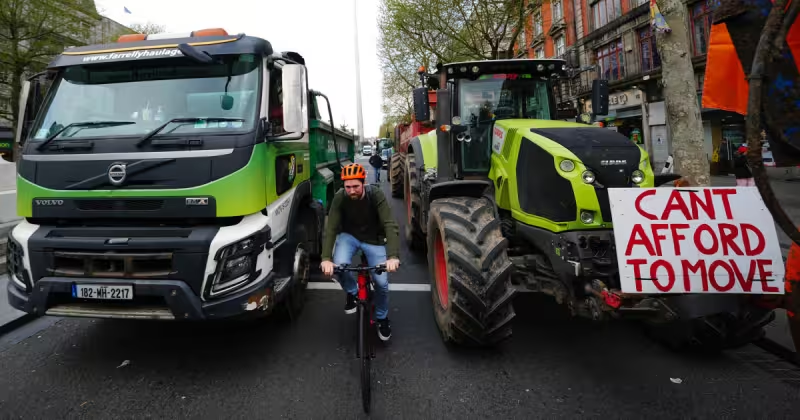
Hauliers, farmers and other groups blocked motorways across Ireland on Friday, bringing parts of Dublin to a standstill as the protests entered their fourth consecutive day. Police warned some demonstrators to disperse or face arrest.
The government responded by putting the army on standby to help remove blockades, while An Garda Síochána said the disruption was endangering critical supplies of food, fuel, clean water and animal feed. The force said, “This is not tolerable and is against the law.”


The stoppages have been feeding on anger over higher fuel costs, but they are now colliding with the state’s warning that the country cannot afford a prolonged shutdown. Taoiseach Mícheál Martin said Ireland was on the verge of turning away oil deliveries and losing its supply, adding in an interview with RTÉ: “It is unconscionable, it’s illogical.” Diesel prices in Ireland had risen from about €1.70 a litre to €2.17, while petrol climbed from roughly €1.74 to €1.97.
The unrest began as a knock-on effect from the conflict in the Middle East after the United States and Israel began attacking Iran on 28 February. Industry representatives were due to bring their members’ grievances to ministers later on Friday, but the government also said the blockade of ports and a refinery put the country at risk of losing its fuel supply if the protests continued. Some demonstrators have threatened to keep the disruption going for weeks if necessary.
Justice Minister Jim O’Callaghan said “outside actors” such as the British far-right activist Tommy Robinson were manipulating the protests, adding another layer of tension to a movement already testing the limits of public patience. The immediate question is no longer whether the blockades have made their point. It is whether the government can reopen roads and restore supplies before a protest over prices becomes a broader national disruption.