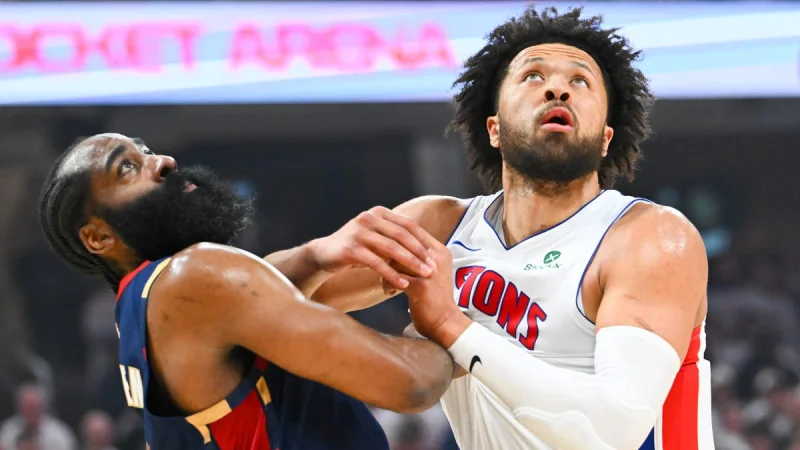
DETROIT — The Pistons had the Cavaliers in trouble late in Game 3 of the Eastern Conference semifinal on Saturday, May 9, but they could not finish the job. Detroit let a 17-point deficit shrink into something far more dangerous, then watched the game turn on a sequence of late mistakes that Cleveland turned into points.
Cade Cunningham, asked about the loss after the game, said simply, “It is what it is.” He called his three late turnovers “bad plays,” and those miscues helped bury a Detroit rally that had put the Cavaliers 3 feet under and then 3 more feet under before the finish slipped away.
That ending mattered because the Pistons had spent the spring learning how to survive when Cunningham was not carrying them alone. J.B. Bickerstaff changed Cunningham’s substitution pattern during the Orlando series after seeing him fade late in games, starting in Game 5 by resting him six minutes into the first quarter. Detroit won its next five games after the change, and Bickerstaff kept trying to time Cunningham’s breaks around timeouts and end-of-quarters in the playoffs. The plan was working well enough to keep the Pistons alive, but Game 3 showed how thin the margin still was when the game got tight.


The critical sequence came with two minutes left in the third quarter, when Bickerstaff tried to pull Cunningham after a poor transition pass to Paul Reed. Officials would not let Daniss Jenkins check in at that moment, and Cunningham immediately committed a turnover that led to a Max Strus fastbreak layup. He then turned it over again on the inbounds pass after the layup and hit the back of the basketball stanchion, a painful stretch that helped Cleveland regain control.
Jenkins was part of the problem and part of the larger story. Dennis Schröder got into his head on Saturday, and Jenkins tossed an elbow at Schröder in the second half, making contact first with the shoulder and then the neck. Schröder embellished the contact, drew a foul call and forced an official review for a flagrant, but the review concluded it was not a flagrant foul. Jenkins also struggled to shoot and struggled to make plays, a rough night after he had been critical to Detroit’s first-round turnaround following early struggles against Orlando. He had played electric ball in the first two games of the Cavaliers series, but Saturday was not one of those nights.
The loss leaves Detroit where young teams often land in the postseason: close enough to feel the series swinging, not polished enough to take it. Cunningham had only recently returned to playoff rhythm after missing a few weeks with a collapsed lung, and the details around his minutes, the bench timing and the late-game execution decided a game the Pistons had a real chance to steal. They did not, and that is the part they now have to carry into the next game.