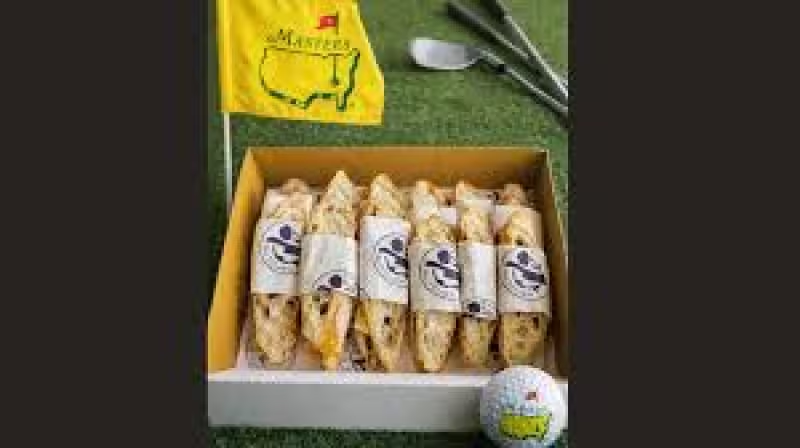
Josh Allen strolled down the first fairway at Augusta National on an idyllic Saturday afternoon last spring, eating an egg salad sandwich that cost $1.50. This year, the price is still $1.50, and the pimento cheese sandwich remains $1.50 as well, even as the most expensive sandwiches top out at $3 and a cup of soda goes for $2.
The candy bar is new, and it costs $2.25. A Crow’s Nest beer is $6. Buy one of every concession item on sale and the total comes to $78.75, a bill that says as much about Augusta National as any trophy ceremony ever could. The club remains wholly private and secretive, but its Masters pricing has become part of the event’s identity: low enough to feel almost stubborn, and unchanged enough to feel deliberate.
That approach reaches back to 1932, when Clifford Roberts and Bobby Jones founded Augusta National during the Great Depression, and the tournament soon became critical to the club’s survival. Roberts believed Masters profits should go toward the next year’s event instead of the club or its members, and that model has endured for decades. CBS has carried the Masters for the last 70 years, while Bank of America, AT&T, IBM and Mercedes-Benz serve as champion partners and Delta Air Lines, Rolex and UPS are tournament partners, helping explain why the club does not need concession revenue to fund the week.



Read Also: Sam Darnold Katie Hoofnagle Wedding: Black-Tie Rancho Santa Fe Ceremony
The contrast with ordinary sports business is hard to miss. Merchandise sales at Masters week pull in $1 million per hour by at least one estimate, and the profits from souvenir gnome sales alone are probably enough to pay out the winner of the 3M Open for the next decade. That is why the cheap sandwiches matter. They are not a loss leader in the usual sense, because Augusta National is not trying to make back the event on lunch and soda. They are part of a closed system built to protect the tournament’s aura while keeping the price of entry, at least at the concession stand, almost absurdly low.
That system also helps explain why Augusta National and the Masters operate differently from other major sporting events, from the private structure of the club to the sponsor model that underwrites the week. It is the same event that drew Allen to a sandwich last spring, and the same one that still sells the same sandwich for $1.50 this year. In a sports economy built on squeezing every dollar, Augusta National keeps insisting on a different lesson: scarcity can be sold, but some of the basics are best left cheap.
For readers tracking the tournament from the gate, the next pressure point is not the lunch counter but the rules and access that shape the experience, from the Masters Tickets resale crackdown that caught a patron at the Augusta National gate to the way Mark Calcavecchia and the Masters rules are shaping Augusta National in 2026, and even how Phil Mickelson advice helps Jon Rahm frame Augusta National par value.