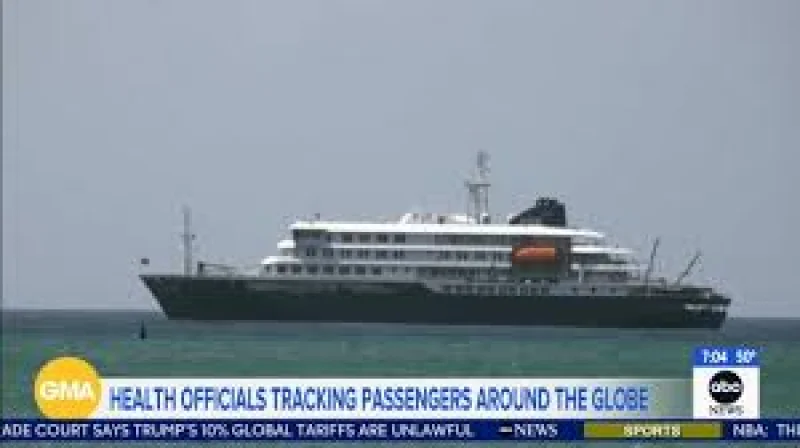
Spanish authorities on Friday were preparing to receive more than 140 passengers and crew members aboard a hantavirus-stricken cruise ship due to arrive on Sunday in Tenerife, where everyone on board is to be taken to a completely isolated, cordoned-off area.
The vessel, the Dutch-flagged MV Hondius, is carrying a growing public health concern that has already left three people dead and at least five passengers known to be infected. The ship is headed to the Canary Islands after weeks of scattered alerts and delayed tracing.
On Thursday, Oceanwide Expeditions said there were no people with symptoms of a possible infection on board. But the World Health Organization still said the risk to the wider public was low, and on Friday its spokesman, Christian Lindmeier, sought to draw a firm line under the alarm. “The risk remains absolutely low,” he said. “This is not a new COVID.”
That reassurance sits alongside a more complicated reality. Hantavirus is usually spread by inhaling contaminated rodent droppings and is not easily transmitted between people, but the Andes virus detected in the cruise ship outbreak may be able to spread in rare cases. Symptoms can take one to eight weeks to appear, which helps explain why health officials across four continents are still chasing passengers who left the ship long before the outbreak was confirmed.

On April 24, more than two dozen people from at least 12 different countries disembarked without contact tracing. It was not until May 2 that health authorities first confirmed hantavirus in a ship passenger. Since then, officials have been trying to account for everyone who may have been exposed, including those who passed through airports and flights far from the ship itself.
One of those links is a KLM flight attendant who was working on a Johannesburg-to-Amsterdam flight on April 25, when an infected cruise passenger briefly boarded the plane. The passenger was a Dutch woman whose husband died on the ship. Too ill to continue the international journey, she was taken off the plane in Johannesburg, where she died. Her later contact with the flight attendant has become one of the clearest examples of how far the outbreak has spread beyond the vessel.
On Friday, the WHO said the flight attendant had tested negative for hantavirus. The Dutch public health service was still tracing passengers on that flight who had contact with the ill woman before she left the plane. The flight attendant had been taken on Thursday to an isolation ward at an Amsterdam hospital after falling ill.
Health alerts also widened on Friday. U.K. health authorities said a third British national who had been a passenger on the ship was suspected of being infected, and the person was on Tristan da Cunha. Spanish health officials said a woman in Alicante was showing symptoms consistent with hantavirus infection and was being tested. She had been on the same flight as the Dutch woman who died in Johannesburg after traveling on the cruise ship.
For Tenerife, the immediate issue is containment, not uncertainty. Virginia Barcones, the Spanish official overseeing the response, said passengers will be kept in a “completely isolated, cordoned-off area” when the ship arrives. The island is the next stop for a vessel now tied to deaths, testing, quarantine procedures and a widening international search for people who may already have gone home. That combination is why the story is not just about a ship at sea, but about how quickly one outbreak can travel when symptoms arrive late and people move first.