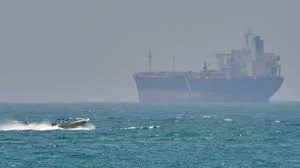
The U.S. military fired on an Iranian oil tanker on Wednesday, hitting its rudder in the Gulf of Oman as the vessel tried to breach the American blockade of Iran’s ports. U.S. Central Command said a fighter jet carried out the strike while Iran and the United States were officially in a ceasefire.
The attack came as President Donald Trump said a deal with Tehran could soon end the more than two-month war and bring back oil and natural gas shipments disrupted by the fighting. On social media and in an Oval Office appearance on Tuesday, Trump said the conflict could stop if Iran agreed to terms that included opening the Strait of Hormuz, a chokepoint that has become central to the blockade and to the global energy market.



Trump told reporters on May 5 that Iranian officials want to end the war, saying, “We’re dealing with people that want to make a deal very much, and we’ll see whether or not they can make a deal that’s satisfactory to us,” and warning, “If they don’t agree, the bombing starts,” The remarks framed the tanker strike not as an isolated naval incident but as part of a wider effort to tighten pressure on Iran while talks remain uncertain. A report on the blockade’s impact on Iranian exports has already highlighted the strain on the country’s economy, and traders have been watching the risk to shipments through Hormuz closely.
The timing is what makes Wednesday stand out. The tanker was hit while diplomacy was still active and while the war was already spilling across fronts: Israel struck Beirut’s southern suburbs the same day for the first time since a ceasefire with Hezbollah was announced on April 17. Israeli Prime Minister Benjamin Netanyahu’s office said the strike targeted a commander in Hezbollah’s Radwan Force, though Hezbollah did not immediately comment. The sequence undercuts any sense that the region had settled into a stable pause. Fighting in Lebanon had continued after the April 17 announcement, and the last strikes in Beirut before Wednesday had killed more than 350 people on April 8.
China also weighed in on the widening conflict. In Beijing, Foreign Minister Wang Yi told Abbas Araghchi that he was “deeply distressed” over the war and said a “comprehensive ceasefire” was needed urgently. With naval pressure in the Gulf of Oman, renewed strikes in Beirut and Trump signaling that a deal could unlock both peace and shipments, the next step now hinges on whether Iran accepts terms Washington can live with — or whether the blockade and the war both intensify again.