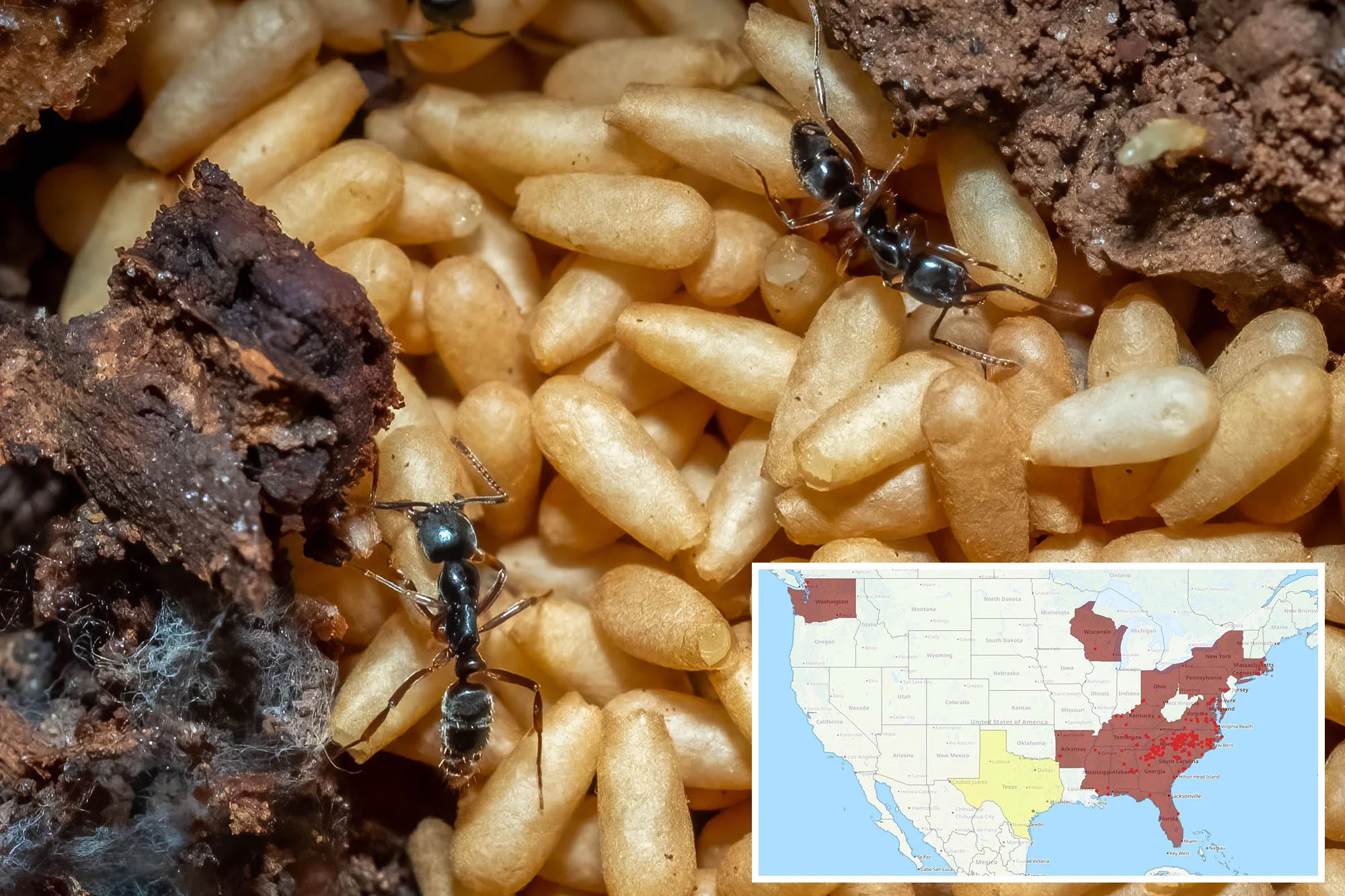
Asian needle ants, invasive ants originally from China, have now spread across 20 states, with the heaviest concentrations reported in North Carolina, South Carolina, Georgia and Alabama. The species first turned up in the United States in Georgia in 1932, though officials suspected it had been here before then.
The warning matters now because the ants are not just persistent, they are dangerous. In 2024, three people in Georgia died after getting stung, and researchers say the sting can feel like a needle driving straight into the flesh. Benoit Guénard said the pain is very sharp and acute but usually stays local, though envenomation can also trigger redness, hives and anaphylaxis. The stinger is reportedly sharp enough to pierce clothing.



The ants are mottled brown or black, with slender bodies that measure between 1/4 of an inch and 1.8 of an inch long, which makes them difficult to separate from local species at a glance. They also do not advertise themselves the way many people expect ants to, because they prefer stones and rotting wood and do not march in obvious columns or form visible trails. That hidden behavior has helped them move through the Southeast and beyond, with significant surges also reported in Tennessee, Virginia, Kentucky, Wisconsin and New York, and activity seen in Texas as well.
The broader problem is ecological as much as it is medical. Asian needle ants outcompete species that help disperse seeds, and the U.S. Department of Agriculture says the invasive species could have dramatic, long-term negative effects on forest understory. Scott Egan said it is important to be aware of the new invader, but that researchers still need to learn more, and there is no formal eradication method in place.
For now, protein-based pesticide baits appear to be the most effective control tool, according to North Carolina State University, but they only reduce the threat rather than remove it. That leaves land managers, homeowners and health officials facing a species that is hard to spot, hard to stop and, in some cases, painful enough to kill.