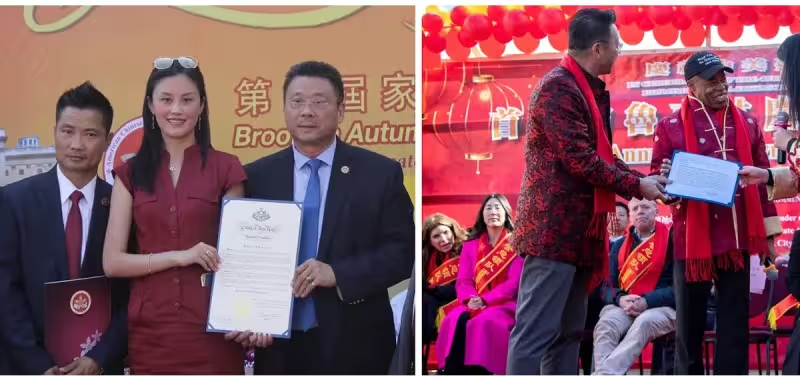
Two top House Republicans on Tuesday urged the Treasury Department and the IRS to scrutinize hometown organizations they say may be tied to the Communist Party of China and used to exploit the U.S. nonprofit system. House Select Committee on the Chinese Communist Party Chairman John Moolenaar and House Ways and Means Committee Chairman Jason Smith said they have grave concerns about the groups, which were formed by immigrants from the same towns or provinces in China to welcome newcomers, organize parades and preserve social and cultural ties.
In a letter to Treasury Secretary Scott Bessent and IRS Commissioner-designate Frank Bisignano, the lawmakers said some of the organizations appear to be part of a CCP United Front strategy, which a prior congressional memo described as a unique blend of engagement, influence activities and intelligence operations used to shape political environments and advance Beijing’s interests abroad. The letter said some of the groups are created under the guise of Chinese expatriates creating overseas friendship in the world.
The warning lands as Washington continues to focus on foreign influence efforts inside American civic life. In February, the Ways and Means Committee examined malign foreign influence in the U.S. nonprofit sector, including organizations linked to Neville Roy Singham, who was born in the United States and lives in Shanghai. A Digital investigation later tracked $278 million that Singham poured into a network of groups.

The lawmakers also pointed to reporting last year that said at least 53 organizations endorsed or raised money for political candidates and that at least 19 were in clear violation of federal restrictions. Those figures helped sharpen the argument that groups presenting themselves as cultural associations can at times function as something else entirely.
The concern is not theoretical. In recent years, the FBI investigated and raided the offices of the American Changle Association in New York City and alleged the group housed an illegal secret police station run by China’s Ministry of Public Security. Two people were arrested for acting as unregistered foreign agents in connection with the alleged station, Chen Jinping of New York, New York, later pled guilty to conspiring to act as an illegal agent of the government of the People’s Republic of China, and a second man’s case is still moving through the courts.
That mix of cultural outreach, political activity and alleged covert enforcement is why the letter matters now. Moolenaar and Smith are asking Treasury and the IRS to look more closely at how the nonprofit tax system is being used, and whether groups that began as hometown associations have become part of a broader influence apparatus tied to Beijing.