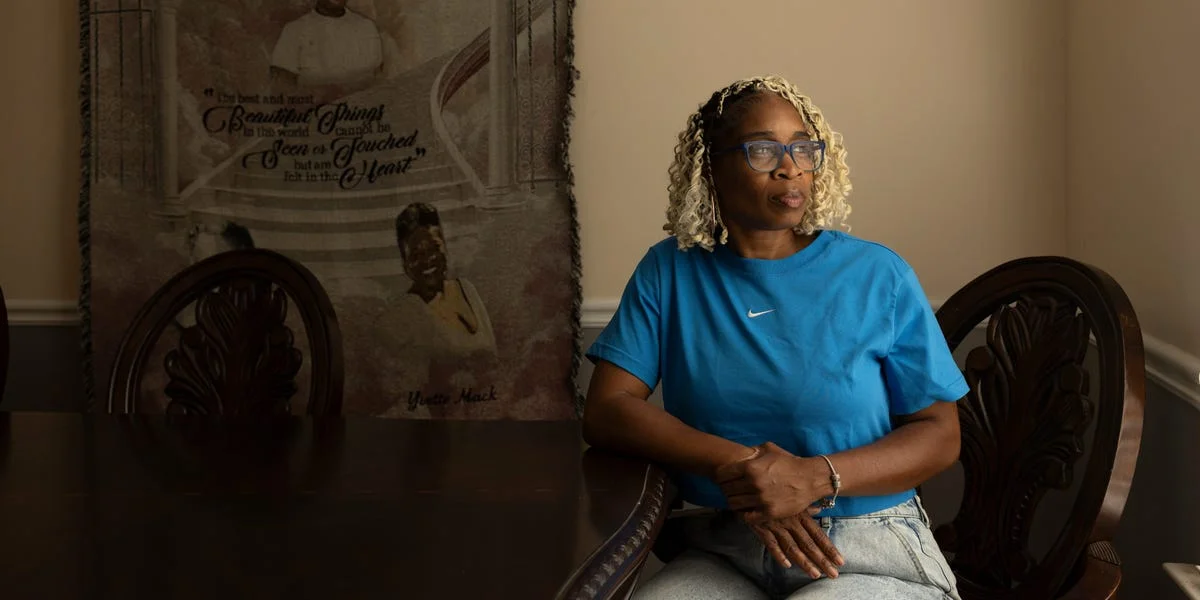
Cepia Harper starts her day before dawn with a commute to a middle school classroom in Atlanta, then spends her evenings folding shoes at Nike until about 8 p.m. The 43-year-old teacher, who once got $20,400 in cash from Atlanta’s basic income pilot, said she is back to juggling multiple jobs after a period when the money changed the shape of her life.
Harper was among 650 low-income Black women who received the payments between 2022 and 2024 through Atlanta’s In Her Hands program, which delivered $850 a month with no strings attached. She said the cash helped her build savings, earn a new teaching certification and move from what she called being “pretty much homeless” into her own apartment. By April, she said she was again working multiple jobs, including a part-time retail shift she returned to at Nike last summer.
When Business Insider first spoke with Harper in the summer of 2024, she had just begun teaching full time and felt stable enough to leave her part-time retail gigs. But by April, she said the balance had shifted again. Harper said that before the basic income, she was cobbling together several retail jobs, unable to step away for her children’s sports games and unable to breathe easily about groceries, rent and the rest of the month.

The payments, she said, changed that quickly. Harper said the money helped her leave a family member’s home, pay her rent and cover the daily costs of raising her children without the constant strain that had defined her earlier years. She said, “I was able to get a new apartment, substitute teach, and pay my rent because I had that extra income. Later, it led me to get a bigger apartment, and land an even better job.”
Still, Harper’s story also shows the limits of one-time cash relief when the support ends. In Her Hands was run through The Georgia Resilience and Opportunity Fund and GiveDirectly, and Harper qualified because her household income was below 200% of the federal poverty line, about $64,000 annually for a family of four. Business Insider has previously reported that many families used similar payments for childcare, household bills, higher education and debt, but data on what happens years later is still thin. Harper’s own experience suggests the money gave her a foothold, not a finish line.
She said the hardest part was not just paying bills, but gaining the kind of ordinary freedom many people take for granted. Harper said, “I've never had it where I could just go home to my own kids, pick them up from practice,” and for a while, the basic income made that possible. Now, with dawn commutes and night shifts again crowding her week, the question is how long working families can keep that freedom without help that lasts beyond a pilot.