The Republican-led Senate on Tuesday blocked a Democratic-led resolution that would have stopped President Donald Trump from ordering military action against Cuba without congressional approval. The chamber voted 51 to 47 on a procedural measure after Republican Senator Rick Scott of Florida raised the point of order that halted the effort.
Scott argued the vote was unnecessary because Trump had not sent troops against Havana. “If we want REAL reform in Cuba, the illegitimate Castro/Diaz-Canel regime must fall,” he said, adding that he was glad that under Trump’s leadership there was “actual hope for a new day of freedom, prosperity and Patria y Vida (homeland and life).”

Democrats framed the issue differently. Senator Tim Kaine said U.S. efforts to stop fuel shipments from reaching Cuba already amounted to military action. “If anyone were doing to the United States what we are doing to Cuba, we would definitely regard it as an act of war,” Kaine said, arguing that the United States was already engaged in hostilities because it was using American force, primarily the Coast Guard, to enforce what he described as a devastating economic blockade.
The vote was the first Senate test on Cuba and another sign of how hard it has been for Democrats to force Trump to seek congressional authorization for military operations. They have failed repeatedly in both the Senate and the House of Representatives to win that approval, even as the White House says the president’s actions are within his rights and duty as commander-in-chief to protect the United States.
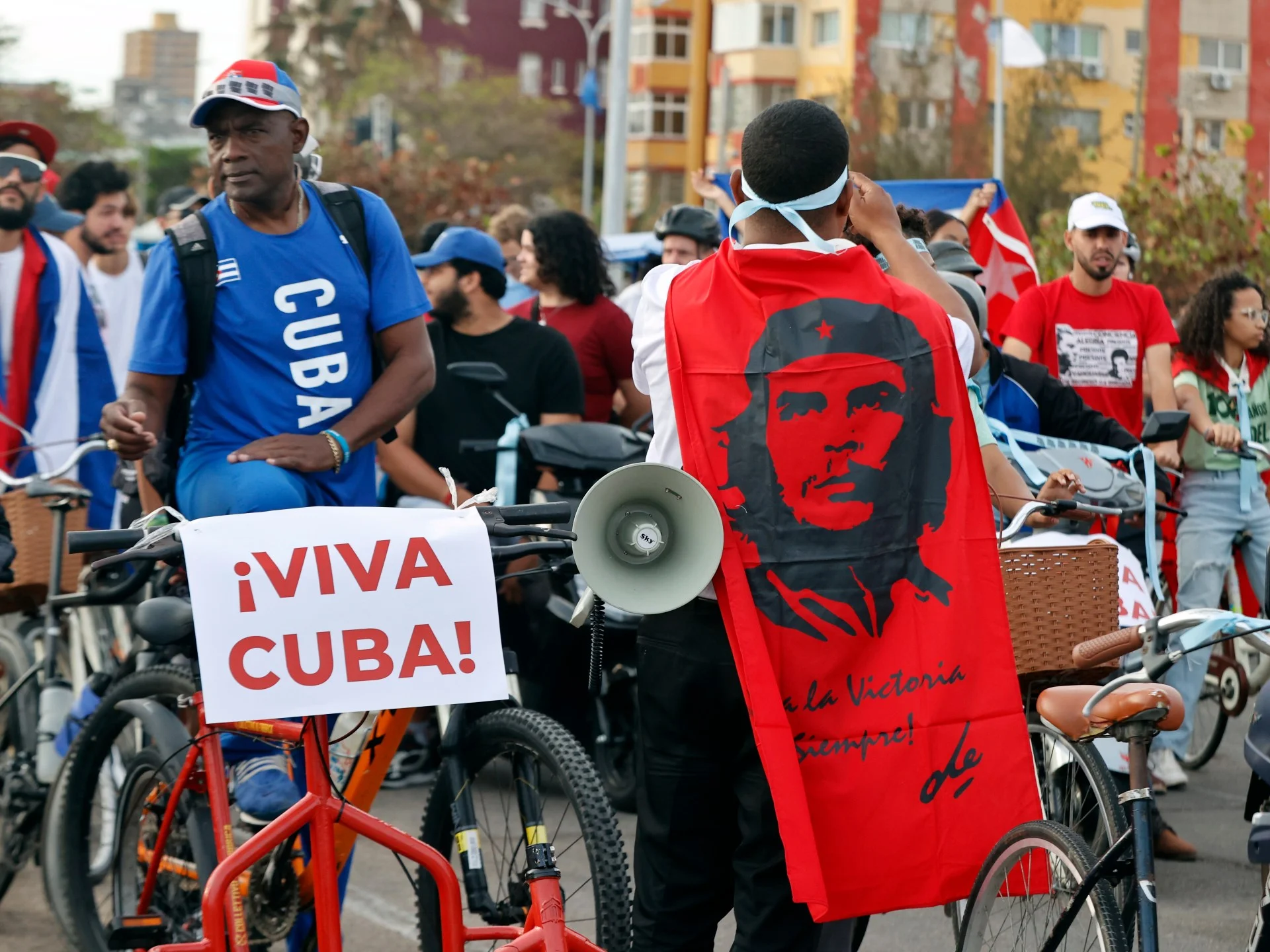
The clash came as Washington was already at war with Iran and after U.S. forces abducted Venezuela’s President Nicolas Maduro and his wife in early January, according to the source material. Trump had also threatened Cuba’s leadership several times in recent months, warning that “Cuba is next.” Kaine, in a social media post on April 28, 2026, called Trump’s war against Iran a disaster and said he was now seeking “a new war with Cuba.” The Senate’s answer on Tuesday was blunt: it would not take away the president’s power to act on Cuba, and for now Trump keeps that authority intact.