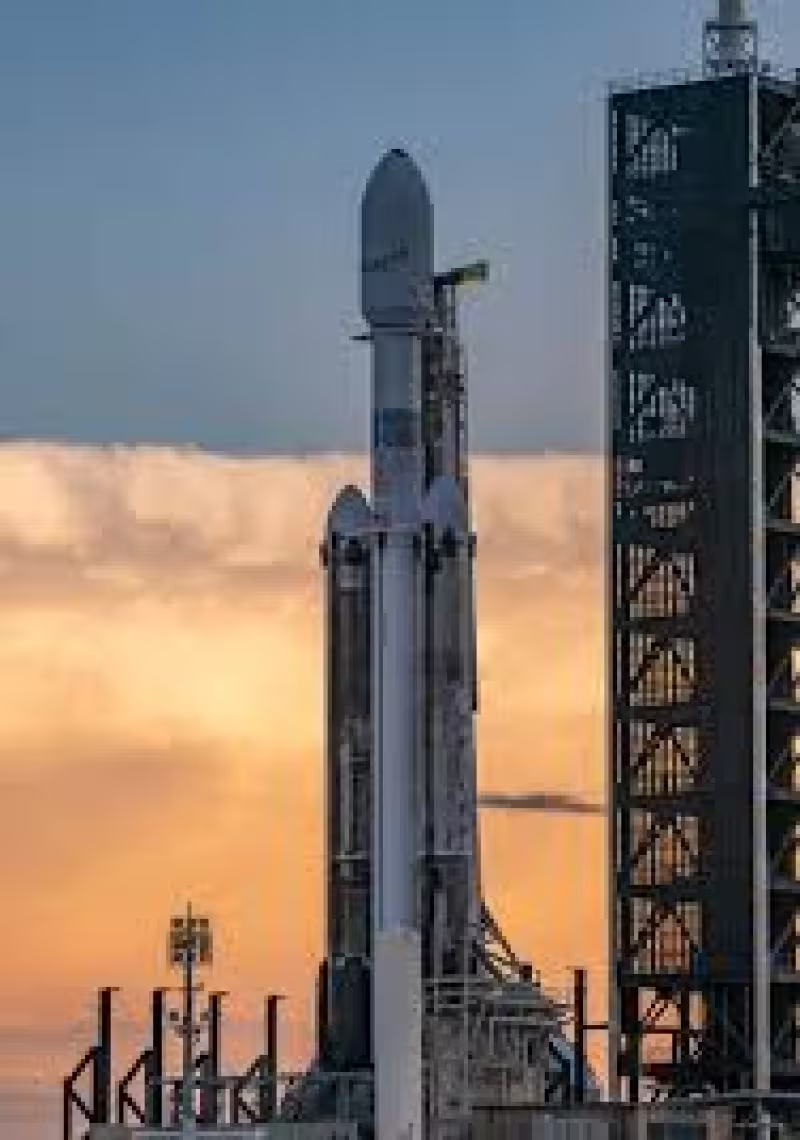
SpaceX scrubbed the ViaSat-3 Flight 3 mission at 10:48 a.m. EDT on April 27, standing down from its first Falcon Heavy rocket launch in more than a year and a half after poor weather moved in over Florida. The launch was set for Launch Complex 39A at NASA’s Kennedy Space Center during an 85-minute window that opened at 10:21 a.m. EDT.
The mission would have sent ViaSat-3 Flight 3, a six-metric-ton communications satellite, to geosynchronous transfer orbit on an easterly trajectory. SpaceX planned to separate the satellite from the Falcon Heavy’s upper stage nearly five hours after liftoff, with orbit raising to 158.55 degrees East along the equator expected to take about two months after deployment.
The launch would have been the 12th flight of a Falcon Heavy, the triple-core rocket that debuted in 2018. The side boosters, tail numbers 1072 and 1075, were assigned to land at Landing Zone 2 and Landing Zone 40, while center core B1098 was to be expended into the Atlantic Ocean and not recovered. Booster 1072 was flying for a second time, and 1075 was set for a 22nd flight.



The weather outlook had not been bad on paper. The 45th Weather Squadron had put the chance of favorable conditions in the Monday window at 70 percent, but launch weather officers were watching the cumulus cloud and surface electric fields rules as a Carolina Low was expected to push a weak back door cold front through central Florida early Monday morning. The forecast left enough uncertainty that SpaceX chose not to continue.
For Viasat, the scrub landed with a sharper edge. Dave Abrahamian said the program had been worked on for over 10 years and that the company had launched the two ViaSat-3 satellites and merged with Inmarsat since the work began, calling it “kind of the end of an era.” He said Falcon Heavy would have offered a more favorable transfer orbit for electric propulsion than Atlas 5, a reminder that the mission was meant to do more than reach space: it was built to save time and fuel on the way to operating position.
The delay is not a surprise in Florida, but it does leave SpaceX without a new launch date and keeps a long-planned satellite in waiting. The question now is not whether ViaSat-3 Flight 3 can fly, but how soon the weather and the rocket line up again.