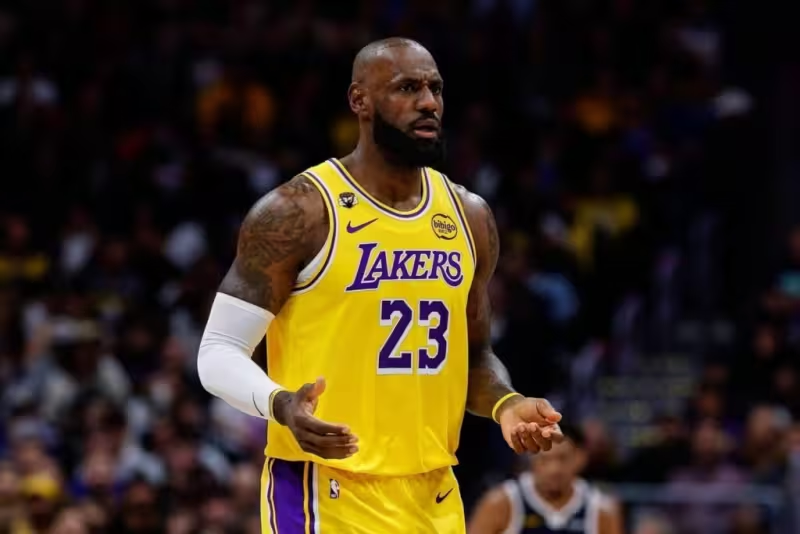
Ron Harper has taken aim at LeBron James again, saying the Lakers star’s longevity is overrated and arguing that players from his era could have played far longer if they had been given the same freedom to sit out games.
Harper said players in his day did not chase mileage for its own sake. They chased production, then kept going through an 82-game schedule. He said James leads the league in longevity, but not in the box-score categories that defined greatness for Harper’s generation. “Can you tell me what stat LeBron James ever lead the NBA in?” Harper said, adding that James never led the league in assists, rebounds or steals and comparing his career arc to Kareem Abdul-Jabbar’s for endurance rather than dominance in a single category.
The comments land as James, 41, keeps extending a résumé that already includes championships with three different franchises and an All-NBA Second Team selection in Year 22. He led the NBA in scoring in the 2007-08 season and in assists in 2019-20, a level of two-way production few players have ever matched. Even so, Harper’s view is that the modern game has turned durability into its own trophy, and he does not see that as the highest standard.



That criticism is part of a broader attack Harper has made on today’s style of play, especially load management. He said players now often miss time after minor injuries in a way his generation would have rejected. “If I feel I’m gonna play,” Harper said. “That’s how we thought about playing.” He said that approach was rooted in a belief that if a player felt able to go, he should be on the floor, not checking out because the schedule allowed it.
Harper’s latest remarks follow earlier public criticism of James, including comments about James imposing his will on Bronny and a separate claim that Scottie Pippen was a better forward than James. Taken together, they show Harper has become one of the sharper veterans in the conversation around James’ place in history. The argument now is not whether James has had a great career. It is whether endurance has started to count for more than the peak level of basketball that once defined the debate.
For James, the numbers remain hard to dismiss. For Harper, they still leave room to argue that the best players of his era might have stayed on the court just as long if today’s habits had existed then. That leaves the larger question not about whether James has lasted, but how the game decides what lasting is worth.