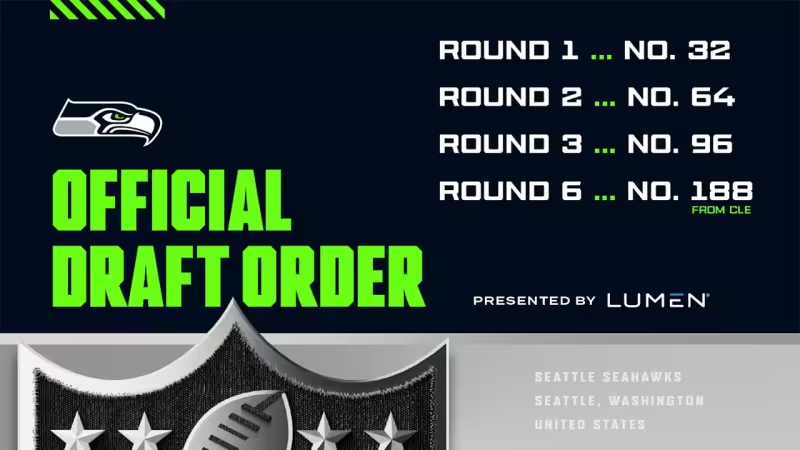
With the NFL Draft set for later this week in Pittsburgh, the Seahawks are not hiding their math. They have only four picks right now, and general manager John Schneider said Monday the team would be open to moving back if it can turn one selection into more.
“It’s no secret with us, we have four picks, so we’ll be looking to move back,” Schneider said in a pre-draft news conference. Seattle is set to enter the 2026 NFL Draft with Round 1, No. 32; Round 2, No. 64; Round 3, No. 96; and Round 6, No. 188, the last of those coming from Cleveland.
That matters because Seattle has built much of its recent success on the strength of its draft classes from 2022 through 2025, a run that helped produce a Super Bowl-winning roster. This year offers less margin for error. A smaller stash of picks usually means fewer chances to fix a miss, and fewer chances to stock the roster with players who can help quickly.

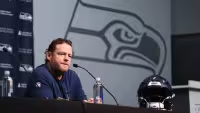

Schneider did not sound concerned about the reduced volume. He said the organization’s job does not change based on how many picks it owns, and that the challenge is to identify “true Seahawks” whether the team is picking early, late or not often at all. “No matter what draft you’re in, what year, it’s our responsibility to the organization to be able to find true Seahawks all the way through it,” he said.
That philosophy is familiar in Seattle, where the team’s draft history has long included premium swings at the top of the board. The Seahawks took Notre Dame defensive tackle Steve Niehaus with the No. 2 overall pick in 1976, Tulsa tackle Steve August at No. 14 in 1977, Memphis defensive back Keith Simpson at No. 9 in 1978, UCLA defensive tackle Manu Tuiasosopo at No. 18 in 1979, Texas A&M defensive end Jacob Green at No. 10 in 1980, UCLA defensive back Kenny Easley at No. 4 in 1981, Clemson defensive end Jeff Bryant at No. 6 in 1982 and Penn State running back Curt Warner at No. 3 in 1983.
Schneider also pointed to the pressure that comes with the draft no matter the inventory, saying the standard is the same whether a team has three picks or a pile of them. “When you say nailing it, no matter if you have the three, or last year having a bunch of draft picks, it doesn’t matter,” he said. “You still feel that same level of pressure to be able to bring the best people you can and for the organization and for the coaching staff.”
Seattle.com has spent the run-up to the draft covering the Combine in Indianapolis, the Annual Meeting in Phoenix, position-by-position previews and analysis from Rob Rang, all while the clock has moved toward Pittsburgh. For the Seahawks, the next few days now look less like a search for one perfect player than a test of whether Schneider can turn four picks into more opportunities without losing the identity he says defines the club. A trade back would not solve every need, but it would give Seattle what it wants most this week: more swings.