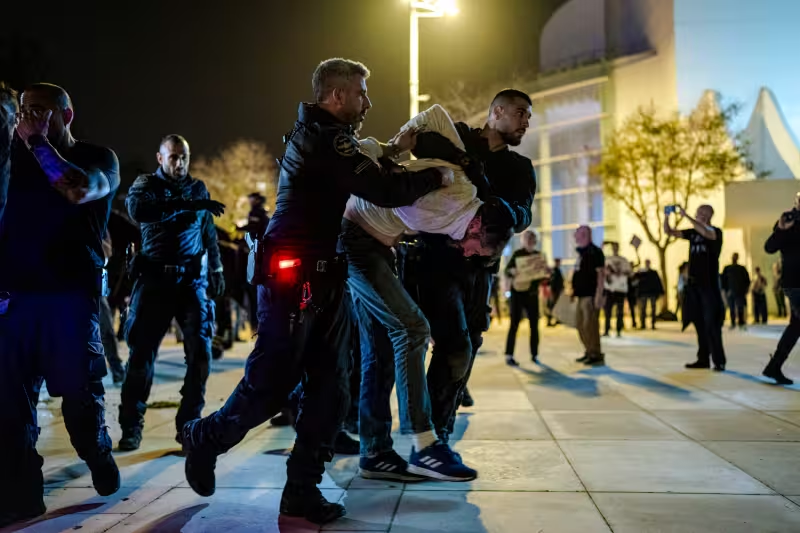
An anti-war protester was arrested in Habima Square in Tel Aviv on April 4, and a week later 17 demonstrators were still in police custody when Israeli authorities confronted an incoming Iranian missile alert on Saturday night.
Alon-Lee Green said the detainees were sitting on a police bus when their phones began buzzing with the pre-siren warning, about 90 seconds before the alert was expected to hit Tel Aviv. He said they asked officers to let them go down to a shelter and were refused. Police told them it was their problem because they had chosen to come to the protest, Green said. After the siren sounded, officers took the activists to a nearby residential building and ordered them to lie on the floor in the lobby.

Green said the lobby was not a protected space and had glass windows. “If there had been a direct hit … they put our lives at risk in a very serious way,” he said. The incident came as police crack down on Israelis protesting the war with Iran, a campaign that has already fed anger inside a country still living with death and injury, financial loss, sleep deprivation, school disruptions, a partially operating airport and state budget cuts one month into the conflict.
The antiwar movement in Israel has grown from a small gathering of far-left activists into multi-city demonstrations drawing more than 1,000 participants each week, but it remains far smaller than the tens of thousands who turned out for weekly judicial overhaul protests and hostage demonstrations after Oct. 7. Support for the war began above 80% after the joint Israeli and U.S. strikes on Iran, but in recent weeks it has fallen into the high 60s, a sign that the political ground is shifting even as the war continues.
For Green and the other detainees, the question is no longer whether the movement has room to grow. It is whether police, in the middle of a missile warning, can keep treating protest as grounds to strip people of basic protection.