Nevada signed an agreement earlier this year with Fog Data Science that gives authorities access to mobile device location data in real time, a tool that can also be used to map a person's patterns of life over longer stretches. Fog says the data can reveal daily commuting routines and personal or professional associations among phone owners.
The deal matters today because much of that cellphone information is already commercially available to businesses, advertisers and organizations willing to pay for it, and governments are among the buyers. The state arrangement adds another example of how mass surveillance is being built through private data markets rather than only through traditional law enforcement collection.



Fog Data Science specializes in accumulating and selling the location data of mobile devices, and the Nevada agreement shows how far that business has moved into public policing. The same kind of information has been used by U.S. Immigration and Customs Enforcement to track people suspected of being in the country illegally, by the Centers for Disease Control and Prevention during the COVID-19 lockdown to monitor compliance with curfews and movement restrictions, by the Defense Intelligence Agency through repeated purchases over several years and by the Internal Revenue Service in tax compliance efforts that were eventually ended after weak results.
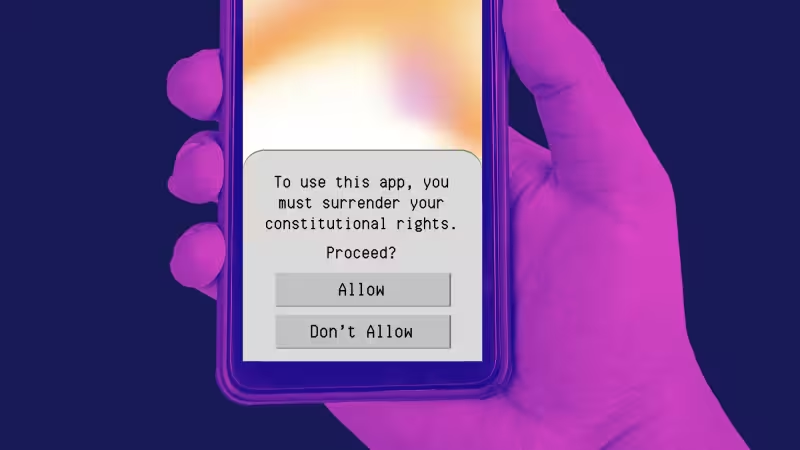
The friction in the story is that governments appear to be avoiding warrant requirements by outsourcing surveillance to private brokers. In 2018, the Supreme Court ruled that law enforcement's ability to collect cellphone data without a warrant is nearly as limited as its ability to randomly enter homes and rifle through belongings, yet the flow of location data has continued through commercial channels. Nevada's agreement sits squarely inside that gap between constitutional limits and what agencies can buy.
What happens next is not whether the data exists, but how widely officials will use it and whether courts or lawmakers tighten the rules around purchases that expose where people go, who they meet and how they live.