The Stanley Cup playoffs opened with a bracket that shoved several of the NHL’s best teams into first-round fights that looked more like second-round matchups. The Athletic polled its NHL staff on every first-round series, the conference winners, the Conn Smythe Trophy, the Stanley Cup, the most overrated team and a playoff dark horse, and the answers quickly showed why this field felt so unruly.
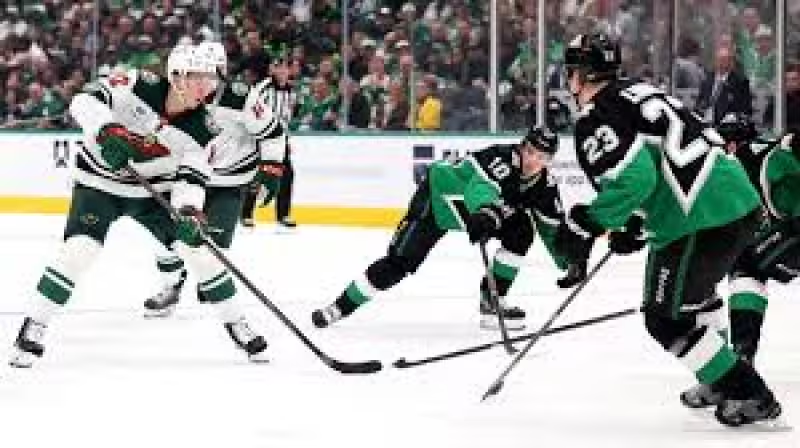
“If anyone says the playoff format is fine, show them this matchup,” Shayna Goldman said of Wild-Stars, a series she and others viewed as one that should not have landed before Round 2. Eight of the NHL’s top nine teams were facing one another in Round 1, a setup that immediately sharpened the debate around how many games in nhl playoffs and whether the bracket was punishing elite teams before the tournament had barely started.


The weight of that complaint came from the teams caught in it. The Wild reached the postseason with 31 regulation wins in a 100-point-plus season, a mark that tied the NHL record for the fewest regulation wins in such a season, and yet they were forced into a series with Dallas that drew repeated mention because of Roope Hintz’s injury and the uncertainty around Miro Heiskanen. Goldman said those factors only added to how close the matchup looked, and the format left little room for the league’s strongest clubs to breathe.
That pressure carried across the rest of the poll. The Penguins were described as having had to fight and scratch and claw just to get into the playoffs, while the Flyers were given Cinderella Story written all over them, with Dan Vladar singled out as their surprising No. 1 goaltender. In Boston, Goldman said the Bruins were a wild card because some nights they looked like a threat and other nights it was just patchy defense covered up by Jeremy Swayman. Buffalo, meanwhile, drew a more optimistic read: James Mirtle said it was finally Rasmus Dahlin’s time to shine in games that matter, and Sean Gentille added that the survey would not let him pick “Sabres in three.”
The real answer to how this postseason will unfold is already visible in the bracket itself: the opening round is doing the work of a later stage, and it is likely to knock out major contenders before the conference race even begins. That is what makes the first week matter so much today, and why every injury, every goaltending swing and every upset prediction feels heavier than usual.