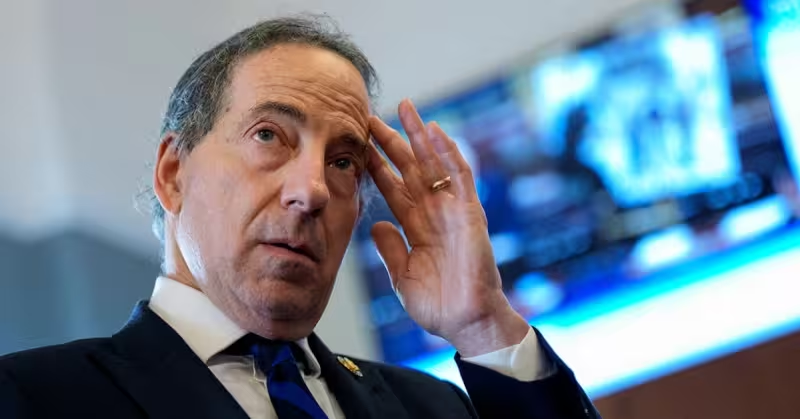
Rep. Jamie Raskin, D-Md., and 50 Democratic co-sponsors reintroduced a bill on Thursday to create a Commission on Presidential Capacity under Section 4 of the 25th Amendment, casting it as a response to what he describes as a crisis involving President Donald Trump. The measure would set up a 17-member panel of physicians, psychiatrists and retired government officials chosen by congressional leaders of both parties.
Raskin first proposed essentially the same bill in 2017, then brought it back in 2020 during Trump’s bout with Covid. This time, the argument is sharper. The amendment allows for the involuntary transfer of presidential power to the vice president when a president is genuinely incapable, such as being comatose, shot or missing after a plane crash. Raskin’s proposal would let Congress direct the commission to conduct a medical examination, though Trump could not be forced to cooperate, and the vice president would still have to agree before any transfer of power could begin.


The weight of the push lies in the charge behind it. The article says Trump appears to be manifestly insane, but also says he is not incapacitated in the way the framers of the 25th Amendment envisioned. It describes him as likely committing high crimes and misdemeanors while still able to issue orders and wield power, however recklessly. That distinction matters because the author argues the 25th Amendment is no substitute for impeachment, and that a proposed panel of doctors and ex-politicians cannot replace Congress doing its job.
The 25th Amendment was written for genuine incapacity, drafted in the shadow of the Kennedy assassination and ratified at the height of the Cold War. Raskin’s bill would create what the amendment calls an “other body” to displace the Cabinet, a step that would be extraordinary even in a constitutional crisis. But the political path is narrow: passage would be unlikely in a Republican-controlled Congress, and it would still require JD Vance’s agreement to move any power from the president to the vice president.
That leaves the central judgment where the bill itself puts it. Trump may be deranged, the article argues, but he is not unable to act, which means the remedy for his conduct is impeachment rather than a capacity panel. The proposal is a new attempt to test the boundaries of Section 4, but it does not answer the harder question of whether Congress is willing to use the remedy it already has.