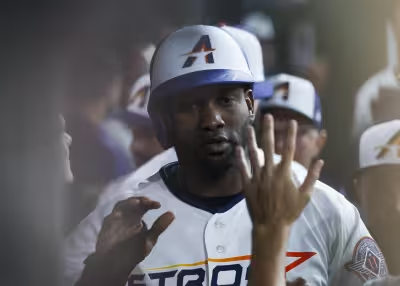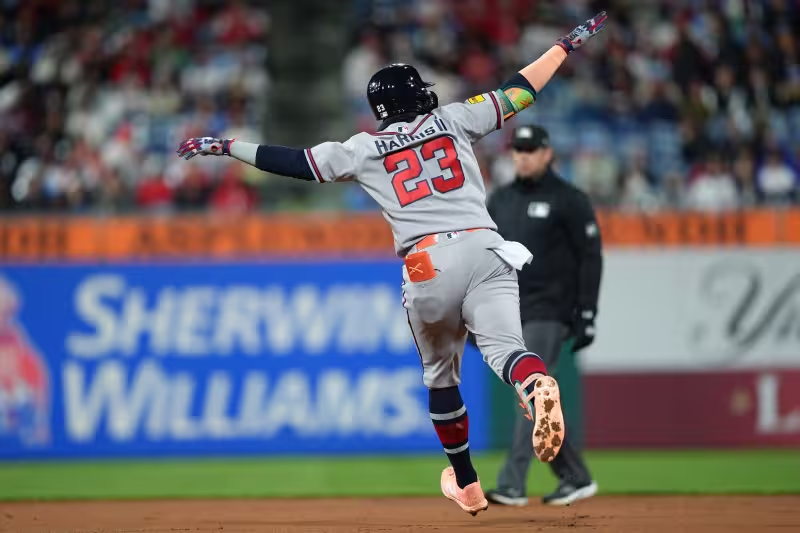
ATLANTA — The Braves finished a sweep of the Philadelphia Phillies on April 19, 2026, and left Citizens Bank Park with a result they had not managed there since September 2016. Atlanta’s 4-2 win completed a three-game turn that stretched its winning streak to five games and turned a hard road series into a statement.
The Braves did it by erasing an early hole and then taking control in the fifth inning. Philadelphia jumped ahead 2-0 in the first on a Trea Turner single and Kyle Schwarber’s two-run home run, but Michael Harris II answered with his fourth homer of the year to cut the deficit to 2-1. Atlanta tied it on a Matt Olson forceout in the fifth, then moved ahead for good when Austin Riley punched an infield single through the defense and Ozzie Albies followed with a double for a 4-2 lead.


Grant Holmes gave Atlanta the platform for the comeback, working 4.2 innings and allowing four hits and one walk while striking out four on 81 pitches. After Holmes left, Aaron Bummer gave up a double to Adolis García, but the Braves had already done enough to secure the sweep and finish the series with a 16-3 edge in runs.
The context is as stark as the score line. Atlanta had opened the set with a dominant Game 1, then won Games 2 and 3 just enough to close it out, and the series ended with the best and worst run differentials in the league attached to the same matchup. That is why this sweep matters beyond one April road trip: the Braves did not simply win three games, they controlled the terms of the entire series in a place where they had not swept the Phillies in nearly a decade.
For the Phillies, the early two-run lead was not enough to change the shape of the night. For the Braves, the response was immediate, efficient and complete, and the result leaves their early-season standing looking much stronger than it did when the first inning started.