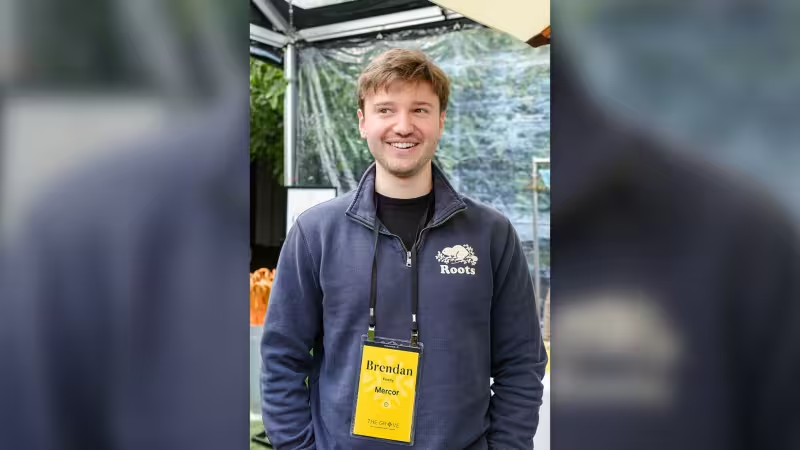
Mercor, the gig-work platform that sends white-collar contractors to AI labs, is now paying out more than $2 million a day as demand for human help in training models continues to surge. The company, valued at $10 billion, has built a marketplace with tens of thousands of experts and is already expanding into work that would once have seemed far outside the scope of an AI staffing firm.
Brendan Foody, one of Mercor’s 22-year-old co-founders, said the scale still feels unreal. “It’s definitely crazy,” he said, adding that “it feels very surreal. Obviously beyond our wildest imaginations, insofar as anything that we could have anticipated two years ago.” The company’s head of operations said chefs, private investigators and plumbing were already in the works, underscoring how far the platform has moved beyond its original focus on traditional office work.
That growth puts Mercor at the center of a larger fight over what AI training work really is. The company connects contractors with labs including OpenAI, Anthropic and Meta, which want humans to teach models by showing them how real work is done. Sundeep Peechu, who has followed the sector, said that “the first era of data was from the internet, but for AI to become truly economically useful, humans must train the model on how they actually do the work.”
For some contractors, though, the experience has not matched the hype. They have complained about an intrusive level of surveillance and said they were treated like cattle, while critics have called Mercor a scheme to misclassify workers. The company’s founders — Foody, Adarsh Hiremath and Surya Midha — are all 22-year-old Thiel Fellows from the Bay Area, part of Peter Thiel’s program that gives $200,000 grants to young people who are skipping or quitting college. Forbes estimates each holds roughly a 22% stake in the company, giving the three a rare front-row seat to one of the fastest-growing businesses in the AI economy.
Mercor’s own job listings show how broad the model may become: a writing expert role on its website pays $75 to $150 per hour. The unanswered question now is whether that kind of work settles into a durable labor market for specialists, or becomes the latest flashpoint in the debate over who the AI boom is really serving.