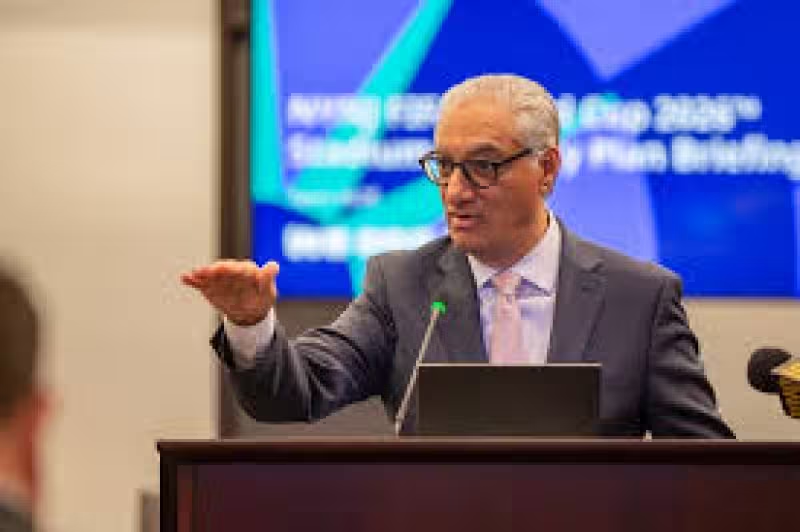
SEPTA said Wednesday it will not charge World Cup tourists, stadium workers or commuters extra to ride the Broad Street subway to Lincoln Financial Field, keeping the base fare at $2.90 for matches in Philadelphia. Andrew Busch said the agency would not be doing premium pricing.
The decision puts Philadelphia on a different track from other host cities preparing for the fifa world cup. NJ Transit is set to charge more than $100 for the 18-mile trip between World Cup games in the New Jersey Meadowlands from New York’s Penn Station, and the Massachusetts Bay Transit Authority will charge $80 for a commuter train ride from Boston to Foxborough for matches at Gillette Stadium, where a normal ticket costs $20. Boston’s host committee also announced a $95 charge for charter bus service to the stadium.

For Philadelphia, the fare question matters because the city is hosting six World Cup matches and SEPTA expects extra trains for the sports complex. The agency also said anyone can ride the BSL at any time, and it has a $5.5 million grant that will cover overtime for running the added service. SEPTA also has a plan to move people to and from the FIFA Fan Festival at Lemon Hill in East Fairmount Park from June 11 to July 19, with additional buses on routes 7, 32, 38, 43, 48, 49 and G1.
The contrast with New Jersey is starker by the day. Gov. Mikie Sherrill said state commuters and taxpayers will not get stuck with the cost, and a news conference is scheduled for Friday to announce the transit plan there. MetLife Stadium will host eight World Cup games this summer, including the July 19 final, after rumors circulated that NJ Transit might charge $100 a ride. Stephen Sigmund said FIFA is not paying extra transportation expenses to host communities, adding that moving 40,000 people would cost NJ Transit $48 million. He also said FIFA is making $11 billion off this World Cup while charging fans up to $10,000 for a single ticket to the final, and that the organization should be helping pay for rides even if New Jersey does not leave commuters to cover the bill.
What emerges is a clear split in how host cities are handling one of the tournament’s less glamorous bills: Philadelphia is treating transit as part of the event, while Boston and New Jersey are treating it as a revenue source. For fans heading to the games, the difference could mean paying subway fare in one city and premium prices in another, a disparity that will only become more visible once the first transit plans are formally set out in New Jersey on Friday.