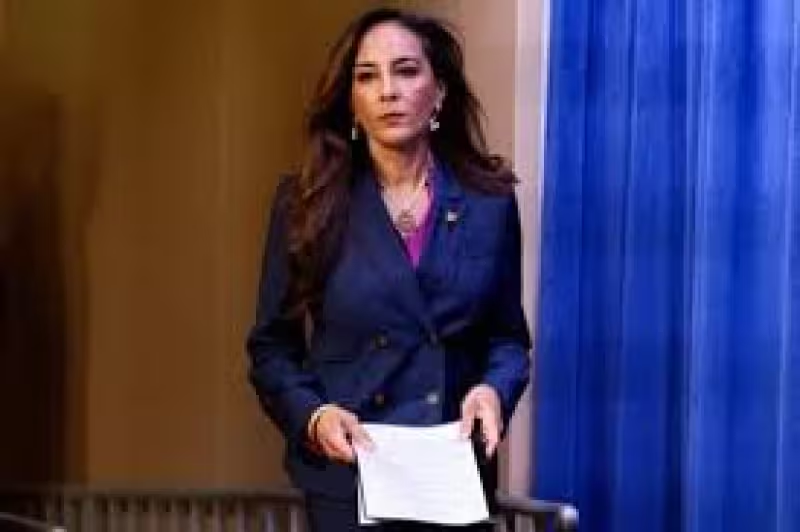
Harmeet Dhillon has spent a little more than a year remaking the Justice Department’s civil rights division, and the changes now stretch far beyond the cases she dropped. Since arriving, the assistant attorney general for civil rights has abandoned dozens of anti-discrimination matters seeking relief for minorities in voting, housing, policing and employment, while steering the division toward preventing discrimination against white Americans.
The shift has come with a steep personnel cost. Hundreds of attorneys have left the civil rights division, the part of the department responsible for enforcing America’s federal civil rights laws. On Monday, the department fired a veteran civil rights prosecutor, another sign that the upheaval inside the division is not easing.
That matters now because Dhillon is rumored to be under consideration for the department’s associate attorney general post, the No. 3 job at Justice and the role that oversees all of the department’s civil litigation. She may even be the next attorney general, putting the architect of this overhaul closer to the center of federal law enforcement at the very moment the division is handling politically charged matters including an investigation into Cassidy Hutchinson and the prosecution of Don Lemon and protesters who interrupted a church service in St. Paul in January.


The contrast with the Biden administration is stark. Kristen Clarke led the civil rights division then, and she said the unit under Dhillon is now “nothing more than a shadow of its former self.” Clarke said the division has abandoned its mission to fight hate crimes, human trafficking, law enforcement misconduct, voter suppression, redlining and much more, warning that millions of Americans have been left vulnerable to predatory attacks and discrimination.
Dhillon’s rise also comes against the backdrop of a broader Justice Department upheaval under President Donald Trump. Trump fired Pam Bondi on 2 April after months of pressure to bring prosecutions against James Comey, Letitia James, Adam Schiff and other rivals. The department later secured indictments against Comey and James, but those cases collapsed, underscoring how much of the administration’s legal agenda has become entangled in politics as the civil rights division is pulled in a new direction.
The question now is not whether Dhillon has changed the division. She has. The question is whether she is being prepared to take a larger role in a Justice Department that is already warning, through its personnel moves and its case choices, how far that change may go.