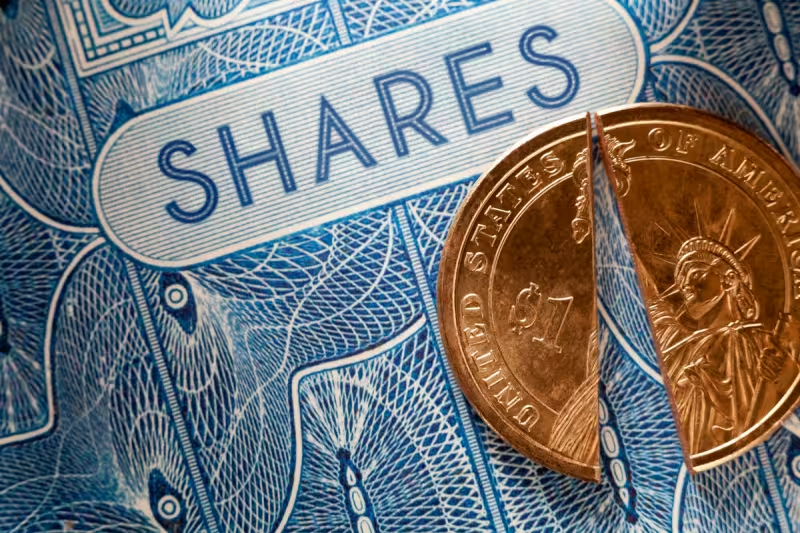
Booking Holdings earlier this month carried out the first stock split in its history, a 25-for-1 move that sent its shares to less than $200. The step came as the travel booking company pressed ahead with a plan to lift its operating margin while keeping growth spending in place.
The split changed the share price, not the business case. Booking Holdings said its adjusted EBITDA margin expanded to 36.9% in the fourth quarter from 35% a year earlier, helped by about $250 million in savings from its Transformation Program and $550 million in annual run rate savings exiting the year. Management expects to keep that pace in 2026 while investing about $700 million in strategic areas that should generate $400 million in incremental revenue, leaving a net investment of $300 million.

Connected Trips remains one of the company’s fastest-moving pieces. Booking Holdings said last quarter it posted high-20% growth in that product, though it still accounts for only a low-double-digit percentage of total transactions. That leaves room for the company to push deeper into the business while it also works on efficiency, a balancing act that has become central to its plan.
The company’s spending plan is broad. It includes generative artificial intelligence capabilities, Connected Trip, hotel network expansion, advertising and OpenTable international expansion. Booking Holdings also expects earnings-per-share growth this year to be in line with its long-term target of 15%, and the stock recently traded at 17 times forward earnings estimates, a level that reflects both the scale of the business and the market’s view of what comes next.
For investors, the split is mostly a headline. The more important story is that Booking Holdings is trying to widen margins, preserve savings and fund growth at the same time. If it can keep squeezing costs while the new investments start to pay off, the company enters 2026 with a clearer path to sustain both profit growth and expansion.