Severe weather season is right around the corner, and for people in southern Wisconsin, knowing the difference between a tornado warning vs watch can shape what happens before the next storm arrives. WMTV 15 has laid out how the alerts work for its viewing area, which is served by the National Weather Service offices in Milwaukee/Sullivan and La Crosse.
A watch means conditions are favorable for dangerous weather to develop. It is typically issued several hours ahead of severe weather, sometimes across a large area that can include many states, and the exact location and timing are still unknown. When a watch is issued, people should have a plan and be ready to act if necessary.
That matters because severe weather can escalate quickly. The Storm Prediction Center in Norman, Oklahoma, issues Severe Thunderstorm and Tornado Watches, while individual National Weather Service offices issue Warnings and Advisories. A severe thunderstorm is any thunderstorm that produces winds of more than 58 mph, hail of 1 inch or greater diameter, and/or a tornado, and a tornado is a rapidly rotating column of air extending from the base of a thunderstorm that is in contact with the ground. Funnel clouds are often mistaken for tornadoes, which is one reason officials stress knowing exactly what area you are in before storms move through.
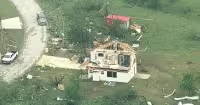
A warning is different. It means severe weather is occurring, imminent or likely, and people need to immediately evaluate the situation and put their severe weather plan into action to avoid harm to life or property. Unlike a watch, a warning includes the area impacted by a storm and typically covers just part of a county. Advisories are another step below that, meaning a hazardous weather situation is ongoing or expected soon, but usually more of an inconvenience than a life-threatening situation. The most common is a flood advisory.
The sharpest line in the guidance is not the wording but the reaction it requires. During a watch, the work is preparation. During a warning, it is action. That difference can be easy to miss for people who do not know what county or surrounding areas they live in, but that knowledge becomes vital when severe weather information is being relayed. It matters just as much for travelers, who may need a basic understanding of their surroundings if impactful weather moves in their direction.
There is also an even higher level of urgency. An emergency may be issued as a flash flood emergency or tornado emergency when there is great concern to life and property and severe weather is expected to hit a heavily populated area. In that case, people should take immediate action and do whatever possible to save themselves. For southern Wisconsin, the practical answer is simple: learn your county, know the nearby towns, and treat a watch as the signal to get ready before a warning gives you no time to waste.