Hydrogen sulfide readings in South Bay have surged to levels UC San Diego researchers say are unlike anything they have seen since September 2024, with some recent measurements reaching 150 times California’s safety standard. On Sunday, April 12, the Airborne Institute recorded readings above 2,000 parts per billion, far beyond the state limit of 30 parts per billion.
Dr. Paula Granados said the gas concentrations rose sharply once they reached that point, describing levels in the range of 9 to 12 parts per million and warning that dangerous health conditions begin at that range. South Bay District 1 Supervisor Paloma Aguirre shared the new readings online, calling it “a milestone nobody wants” and saying the region is “entering a new era of crisis.”
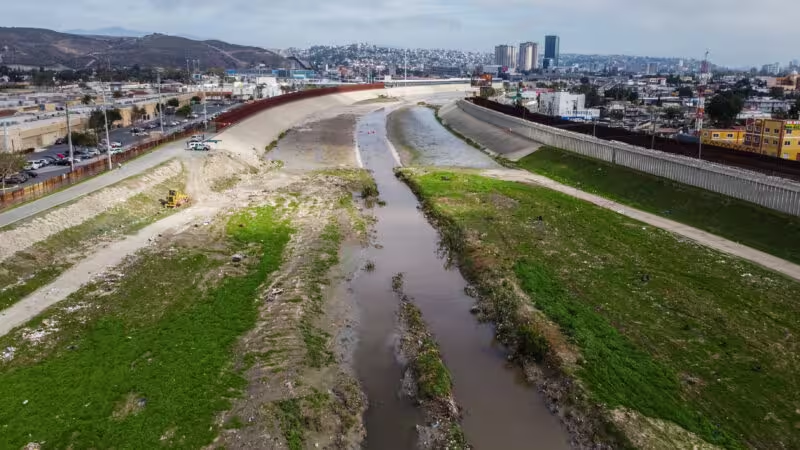
The numbers matter because, on April 5, hydrogen sulfide stayed above California’s 30 parts per billion standard overnight for the first time. The South Bay has lived with a decades-long sewage stench problem, and UC San Diego and San Diego State researchers have been monitoring hydrogen sulfide and other harmful gases in the area as complaints mounted.
For Imperial Beach resident Sonia Mayorga, the science has become personal. She said she and her husband suffer severe symptoms when they are at home, but the symptoms disappear as soon as they leave. “We have a beautiful home, with my family over there, we can't go back because it's so toxic,” she said. “I literally wanna cry. I wanna go back and I can't,” she said, adding, “Our bodies can't handle it, so we have to be out.”
Prather said the readings are higher than what would be seen at wastewater treatment plants, where workers wear protective gear. “That’s kind of the closest analog, you know, but this is higher,” she said. “These levels are levels that workers in wastewater treatment plants put on all their PPE and walk around, right? The community doesn't have that.”
She has also called on Gov. Gavin Newsom to declare a state of emergency over what she describes as an air quality crisis. In a Facebook post, Prather wrote that her research team’s continuous monitoring shows “an air quality crisis with no parallel anywhere else in the United States,” and said, “The link to health damage on people and the environment is proven... You have the power and the authority. Please use it — before you leave office.”
The latest readings add pressure to a problem that has lingered for years, but they also sharpen the stakes. The question now is not whether the Tijuana River-area air is worsening; it is whether state leaders will treat these numbers as an emergency before more residents are forced to keep living away from home.