Charles Melton says a running scene in the new season of Netflix and A24’s anthology series Beef left him with a torn hamstring and a bizarre recovery shot that he described as salmon DNA. The 35-year-old actor said he hurt himself while filming a fast sprint scene, after skipping a warmup.
“You know that scene in episode *REDACTED* where I’m running? I tore my hamstring! I had a little baby tear because I was running so fast, and I didn’t warm up, so I had to get a shot in my hamstring with salmon DNA,” Melton said. “Every time I squeezed my leg, caviar came out.”
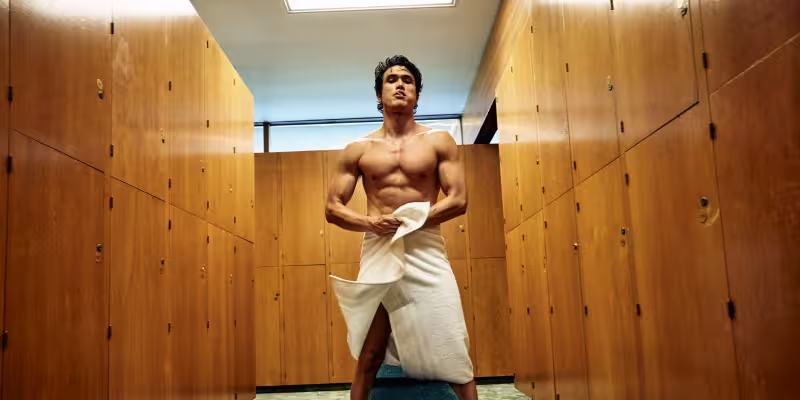
The injury came while Melton was promoting Beef season 2, which drops him into the show’s new setting at a country club as Austin Davis, a gentle gymfluencer and working-class Zoomer in a relationship with a character played by Cailee Spaeny. Their lives are upended after an encounter with their boss, played by Oscar Isaac, and his wife, played by Carey Mulligan. The first season of Beef won eight Emmy awards for its cast and creator Lee Sung Jin, and the new season keeps that creative momentum under a sharper, more high-gloss setting.



Melton said he loved being part of the series and that Austin’s half-Korean, half-white identity was part of what made the role meaningful to him. “I loved being a part of Beef. Austin being a character that’s half-Korean and half-white, and navigating all these things with this identity…I mean, it was so much fun for me,” he said. He added that Korean cinema was one of the reasons he fell in love with acting, and said this was the first time he had worked with a Korean director.
That director was Lee Sung Jin, whom Melton called Sonny and described as someone bridging Korean cinema and Hollywood. “If Park Chan-wook and Bong Joon Ho had a baby, it would be Sonny,” he said. “What Sonny’s doing, as far as taking Korean cinema and injecting it into Hollywood is incredible.” Melton also said Sung Jin sent the cast a watchlist during production that included Amadeus, Newsroom and Mother, a reminder that the show’s tone draws from unlikely places even as its comedy stays underplayed. “They’re not playing the comedy, but the context of the situation and the circumstance makes it hilarious for the audience,” Melton said.
Beef is built around a collision of people and status, and its second season leans into that contrast. The country-club backdrop, the working-class couple at its center and the presence of wealthier characters around them give the series its friction. Melton’s injury may be the most literal thing to come out of the production, but his remarks point to a bigger reason the show keeps drawing attention: it is a Hollywood series shaped by Korean creative influence, and he says that is exactly what he had hoped to find.