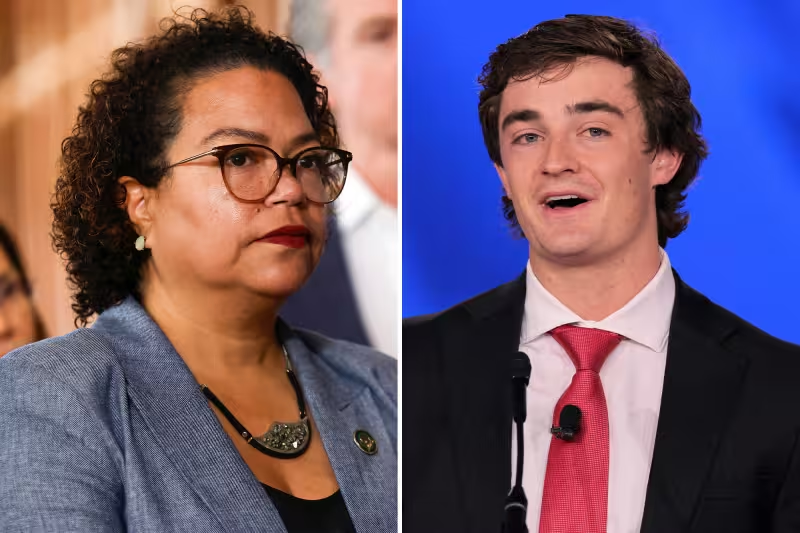
California lawmakers are weighing AB 2624, a bill Assembly member Carl DeMaio says has been nicknamed the “Stop Nick Shirley Act,” after he confronted author Mia Bonta in a recent committee hearing over provisions he says could reach far beyond harassment protections. The measure is being framed as a safeguard for organizations that serve immigrant communities, but its language would let people tied to certain groups demand that videos shot in public be removed and could expose posters to financial penalties.
DeMaio said existing laws already cover threats, harassment and intimidation, making the proposal unnecessary in its current form. He said the bill extends to any group that claims to provide services to immigrants, a reach that could include nonprofit service providers as well as loosely regulated community programs. That breadth is what gives the fight its force today: a measure sold as protection for vulnerable communities could also be used to block public footage from being published online.
The bill sits in a broader debate over who gets to control images made in public spaces. Its backers are presenting AB 2624 as a response to harassment and threats aimed at immigrant-serving organizations, but the disputed provisions go further, giving affiliated individuals a path to demand removal of recordings and even pursue penalties against those who share them. In the hearing, DeMaio pressed Bonta on whether the measure was protecting communities or creating a new barrier to documentation.
The tension is that the bill’s language appears to have been sharpened for passage. “Protection for communities. Protection for organizations. Protection from ‘threats,’” the Current Report said, while warning that “if you document the wrong thing, in the wrong place, involving the wrong people, the state may decide you shouldn’t be allowed to show it at all.” It added that “the language is softer now, more strategic, designed to pass scrutiny without triggering it.” That leaves the central question not whether immigrant-serving groups deserve protection, but whether AB 2624 would also give them a tool to suppress lawful public-record footage.
For now, the bill’s fate will turn on whether lawmakers accept that tradeoff. If AB 2624 advances, the next fight is likely to be over how broadly the protections can be invoked and whether the state is prepared to let private groups police what can be filmed and posted from public life.