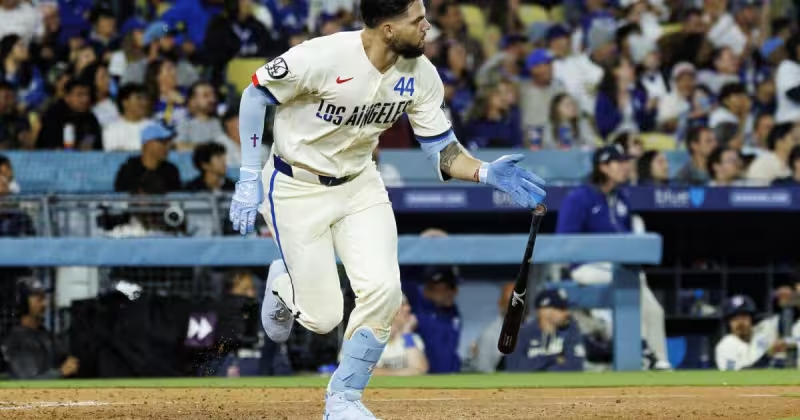
Kyle Tucker’s first two weeks with the Los Angeles Dodgers have not matched the price tag. Through 15 games, the four-time All-Star is hitting.246 with a.659 OPS and one home run after signing a four-year, $240 million deal that carries the highest average annual value in baseball history.
The Dodgers are 11-4, so Tucker has landed in a winning clubhouse, but his own line has lagged behind the standard he set elsewhere. He went 2-for-13 in a series against the Texas Rangers and was 1-for-5 with two strikeouts in Sunday’s loss before saying Monday afternoon that he was not trying to do too much and was trying to be the same player every time.
That matters because Tucker did not arrive as just another bat. He joined a lineup that already includes three different MVP winners and several multi-time All-Stars, on a team that entered the season as back-to-back World Series champions. The Dodgers paid for a middle-of-the-order force, and Tucker’s early numbers have been short of that, especially when measured against the torrid start he had with the Cubs at the beginning of 2025, when he posted a.935 OPS.


Inside the club, the explanation has been less about a long-term alarm and more about timing and approach. Aaron Bates said Tucker looked like he may be trying a little hard and forcing hits, while Dave Roberts said Tucker was getting out of his zone after the Sunday game. Roberts said Tucker was chasing more pitches below the zone and that when hitters chase, they are usually trying to do a little too much.
The numbers back up that concern. Through 67 plate appearances, Tucker had a 23.9 percent strikeout rate, a 24.2 percent chase rate, a 53.6 percent swing rate and a 58.2 percent first-pitch swing rate. Those early figures were worse than his 2025 Cubs rates in strikeouts, chase rate, contact rate and swing rate, a reminder that even elite hitters can take time to settle when they move into a new lineup, a new clubhouse and a new pressure point.
Tucker said he was not trying to force anything. He said he just tries to be the same player every time, and that sometimes the games go well and sometimes they do not. For the Dodgers, the next question is not whether he can hit — his track record already answers that — but how quickly he can turn a slow start into the kind of production that made the contract possible in the first place.