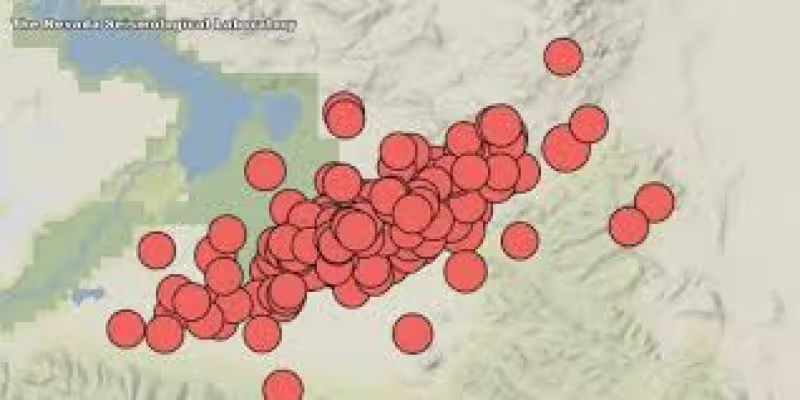
A magnitude 5.5 earthquake centered about 12 miles from Silver Springs shook western Nevada on Monday evening, and a University of Nevada, Reno medical student said the timing made Tuesday’s disaster drill feel far more immediate.
About 180 medical students took part in the exercise, which was built around the kind of response Nevada would need after a major earthquake, including a scenario where patients exceed the available space. UNR student Ozzie Tavares said the quake that hit the day before made the lesson land differently. “It was… very interesting timing… to have an earthquake like that happen just one day before we had a training,” he said. “I think it made us all take it a lot more seriously… Nevada is always at risk for something like this to happen.”
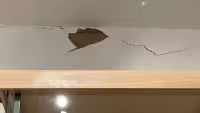
Kyren Bogolub said the temblor was about the seventh largest earthquake in Nevada in the last 60 years or so, and he tied it to the Walker Lane fault system along the Nevada-California border. The system runs for about 600 miles and, Bogolub said, is the most seismically active part of the state. “It’s not necessarily where we have the largest earthquakes, but it’s where we have the most,” he said, adding that getting a magnitude 7 earthquake in the region “would not be shocking” to him.
The training at UNR was scheduled before Monday’s earthquake, but the sequence of events gave it extra weight. Jennifer Delaney said Nevada is the third most seismically active state in the Union, after California and Alaska, and said it is entirely plausible for the state to face a far bigger event. The earthquake and the drill together underscored the same point: western Nevada is not just susceptible to shaking, it is living with the possibility of something much larger next time.