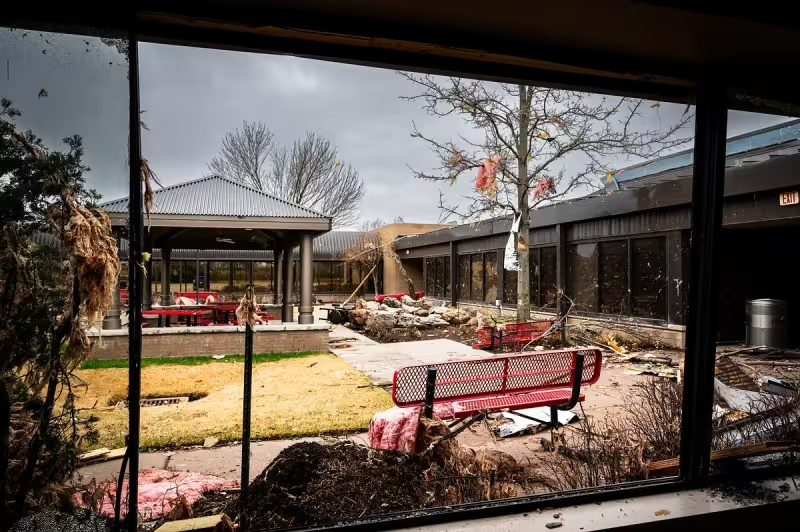
As severe weather season settles over Oklahoma, a growing number of newcomers are learning that tornado Tulsa is less about chasing sirens than knowing where to go when they sound. For people who moved in from elsewhere, the first lesson is often the hardest one: the storm may come fast, but the planning has to start long before the sky turns green.
The writer, who moved out on their own during a first tornado season in Oklahoma City, lived on the top floor of an old apartment building between Moore and Mid-Del with no shelter available to residents. Public shelters in the area would fill up and turn people away unless someone got there hours before a storm, so when sirens went off they sometimes followed Meteorologist Mike Morgan's advice and drove to a part of the city where it was not storming. It was an improvisation born of necessity, not comfort.
That experience lands differently now because Oklahoma’s population is changing. The article says there are a growing number of transplants moving to the state, and in Lawton the writer says about 40% of the population seemed to be newcomers. That group includes military personnel, military families, veterans who settled there and contractors, people who may not have grown up with tornado drills in public schools or the reflexes that came with them in earlier generations.
What makes the lesson urgent is not that tornadoes are common, but that the fear around them can outrun the risk. The article says the odds of being hit by a tornado are astronomically low, and the odds of dying are even lower, about 99.9999999%. The safest advice, it says, is still to stay put and trust the science behind tornado behavior. If there is a shelter, an underground storm shelter offers extremely high safety. If there is not, the recommendation is to get on the ground floor and move to the center of the interior, putting as many walls as possible between a person and the storm.
That leaves Oklahoma’s newest residents facing a practical problem that older ones may already have solved in school or at home: not every city has a public shelter, and not every apartment, rental house or job site comes with one. The gap between what science recommends and what people can actually access is where panic starts, and where the state’s transplants either learn quickly or remain exposed. In a tornado state, the real question is not whether a storm will come. It is whether the people who just arrived know what to do before it does.
Tags: persons — Mike Morgan. Places — Oklahoma, Oklahoma City, Moore, Mid-Del, Lawton. Organizations — none. Events — severe weather season in Oklahoma.