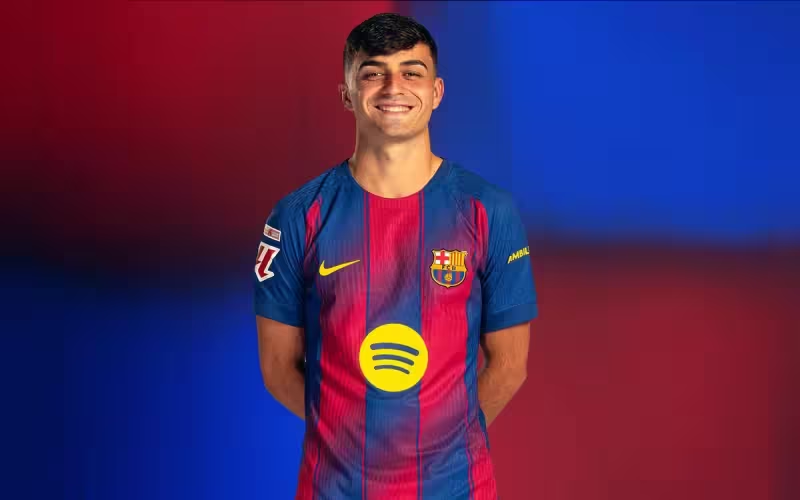
Pedri was born in Tegueste, a villa of about 12,000 inhabitants in the northeast of Tenerife, less than 30 minutes from Santa Cruz de Tenerife. Known officially as Pedro González López, the midfielder comes from a place whose name reaches far beyond football.
Tegueste hosts the largest romería in the Canary Islands, the procession in honor of San Marcos Evangelista held every last Sunday of April. Its historic center is declared a Bien de Interés Cultural, and the village is marked by emblematic buildings such as the Iglesia de San Marcos and the Casa del Prebendado Pacheco.
The town’s identity goes deeper still. Plaza de la Arañita is identified as the place where the villa was founded, while the Barranco del Agua de Dios contains one of the most important archaeological sites in the Canary Islands, protected since 2006. Surrounded by La Laguna, Tegueste is presented not just as Pedri’s birthplace but as a place tied closely to Canarian tradition, history and memory.
That matters because the village is not a backdrop to his career; it is part of the story around him, from the streets that shaped him to the cultural weight carried by the town itself. For anyone following Pedri, the next thing to watch is how often his name keeps pulling attention back to Tegueste, a place with a history that stands on its own.