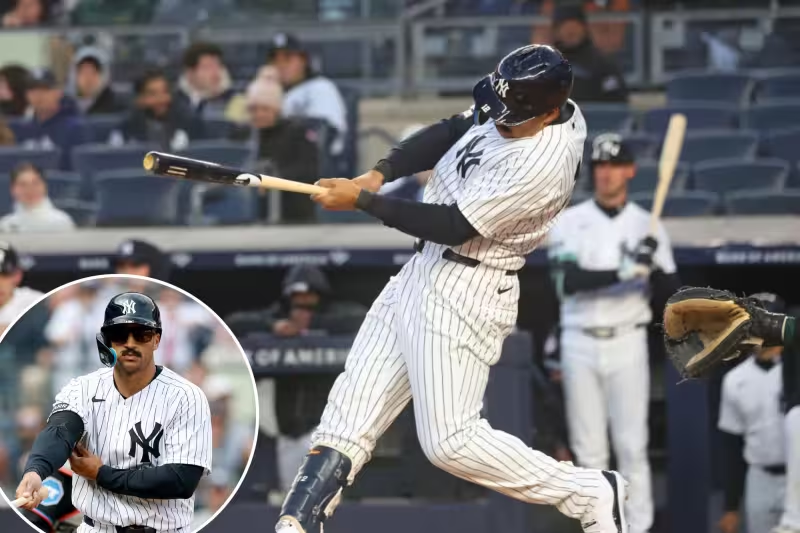
The New York Yankees were swept by the Tampa Bay Rays on Sunday afternoon, and the loss left them with five straight defeats and a share of first place in the division at 8-7. Trent Grisham’s bat has been part of the problem. Hitting leadoff almost every day, he has opened too many innings without giving Aaron Judge, Cody Bellinger and Giancarlo Stanton the baserunners they need to do their most damage.
Grisham has just six hits in 45 at-bats, with a.133/.328/.200 line and no home runs. That is the kind of start that draws attention in a lineup built to punish mistakes, but the underlying numbers point to something less dramatic than a collapse. His hard-hit rate is in the 99th percentile, his expected batting average is.238 and his expected slugging is.445, signs that the contact is louder than the results.
Last season, Grisham hit.258 with a.351 on-base percentage, which is why the Yankees brought him back on the qualifying offer. This year, his chase rate is still in the 99th percentile, his whiff rate sits in the 88th percentile and his walk rate is in the 100th percentile. That suggests the plate discipline is sharper than it was a year ago, even if the box score has not caught up.


The common thread through the Yankees’ five-game skid has been the offense, and Grisham’s poor results fit the profile of a BABIP luck issue more than a process problem. He has not been producing the hits, but the way he is getting to his contact and his ability to control the strike zone have held up. That is why the club is likely to keep letting the season work on him rather than forcing a change.
The situation should resolve itself naturally as the weather warms and the sample size grows. For now, the Yankees need Grisham to give the top of the order a steadier start, because a lineup built around power can only punish pitchers after someone gets on base first.