Sue Bird said the WNBA had not even been created when she first started imagining a future in the sport, a reminder of how much the league has changed by the time players are drafted on Monday night under a new labor deal. The former No. 1 pick, who retired as the league’s leader in assists and games played, called the span from those early hopes to today “a wild journey over 30 years to go from no league at all to a league of our own.”
Bird was speaking as live coverage of the 2026 WNBA Draft unfolded, a night that would have been hard to picture when she entered the league in 2002 on a rookie salary of less than $60,000. The No. 1 pick this year will earn $500,000 in her first season, and the players drafted Monday night will travel on charter flights, a far cry from the era when Bird said there was “no professional path, no professional league, no obvious place for someone like me.”
That change is not cosmetic. This offseason, the players’ union and the WNBA signed a historic collective bargaining agreement that will take effect when the league is in its 30th season. Under the new deal, players will earn $1 million for the first time, and the supermax salary will reach $1.4 million. That compares with the previous agreement, which had a team salary cap of $1.5 million.

Bird’s own career tracks the league’s climb. When she came in as the top pick in 2002, the WNBA had only recently added benefits such as 401K matching and year-round dental insurance. Over the next two decades, salaries rose and the league moved toward the kind of infrastructure that now greets incoming players as routine rather than aspirational.
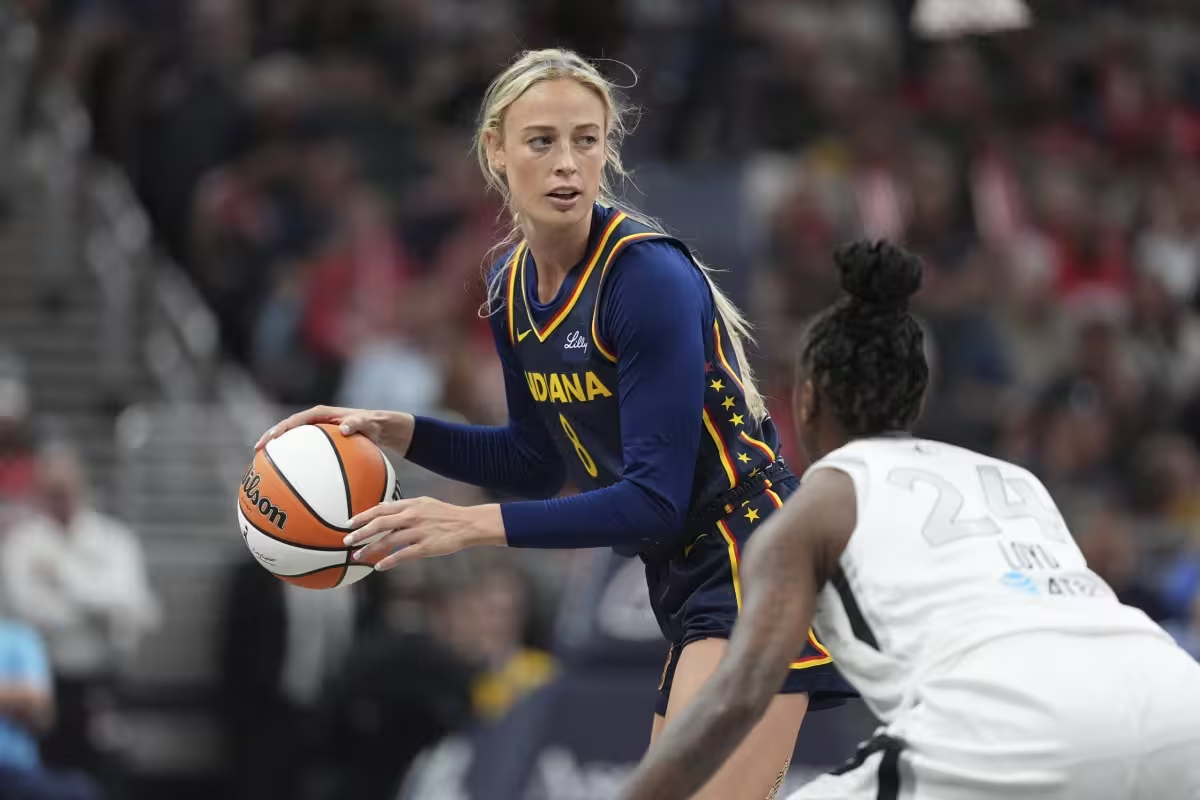
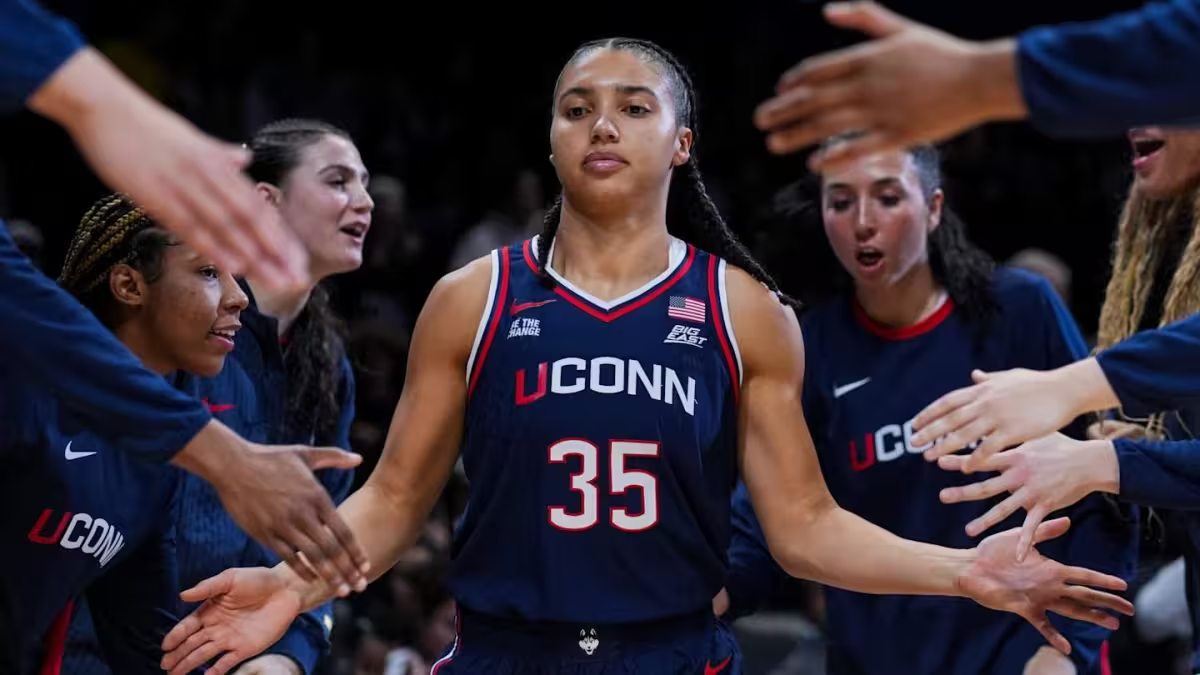

The contrast is especially stark for someone who has spent years watching the league from inside and around it. Bird has been a minority owner of the Seattle Storm, and she said the path that once seemed impossible began to look real for her after watching the 1996 U.S. Olympic women’s basketball team in Philadelphia on its way to the Atlanta Games. That was her “see it, be it” moment.
Paige Bueckers was the No. 1 pick a year ago, and Monday’s draft carries the same sense of arrival, only with more money, more travel support and a stronger labor deal behind it. Bird’s memory of entering a league with so little structure and the current rookie class stepping into one that can pay them half a million dollars in year one is the clearest measure yet of how far the WNBA has come.