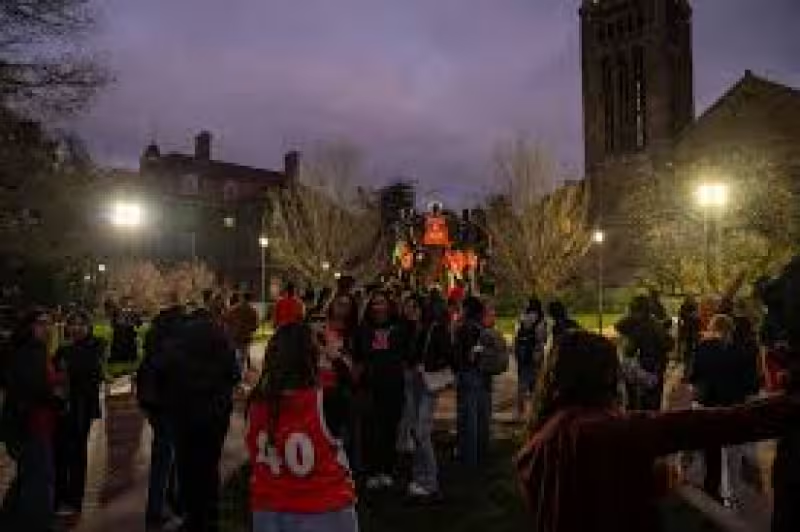
This one is for Illinois alumni. The run to the Final Four was amazing, and it landed in a way that goes beyond one bracket or one spring. For some alumni, these heights never came when they were students, and that is part of why this team has felt bigger than the season itself.
Illinois has always carried a particular burden and a particular promise. The state has traditionally been the best high school talent pipeline in the country, the place where people used to say, “Just get the top players from Peoria and Chicago, and you’ll be fine.” That was the old script. In this era, Brad Underwood changed the script by giving an elite global university an elite global basketball program, built around a largely international roster of skilled, intelligent humans.
That matters because Illinois is not talking about a single lucky March anymore. Two trips to the Elite Eight and beyond in three years is special for this program, and the Final Four only sharpens that point. Underwood has put Illinois in a place where the school can look both forward and backward at the same time: forward to the next roster, and backward to the generations of fans who waited a long time for nights like these. One line that fits this moment says the University of Illinois was truly the University of Illinois; another calls it an elite public university, and both ideas now live on the same court.
The tension, though, is in what this success asks people to believe about the program now. Illinois is not being built only on the old recruiting memory of Kofi Cockburn, Spicy G and the guy everyone loved to call Muh-Teets. It is also being imagined through Giorgi, Mirk, Kylan, Ayo, Tomislav Ivisic and Alfonso Plummer, names that speak to a roster with a wider reach and a different kind of basketball identity. That shift can be thrilling, but it also asks alumni to let go of the idea that only one version of Illinois counts as real Illinois.
There is something larger at stake for the people who have stayed close to the school. The Illinois alumni and family base has a chance to redefine the entire fandom, with Shad Khan, Larry Gies and Josh Whitman representing the school in ways that connect the university’s reach to its basketball rise. Even the memories attached to Kam’s fit into the story, because the original Kam’s smelled differently at 9:00 versus after midnight, and that kind of detail is how fandom gets passed down. The next step is not just another good season. It is whether Illinois can keep turning this era into something alumni recognize as permanent.