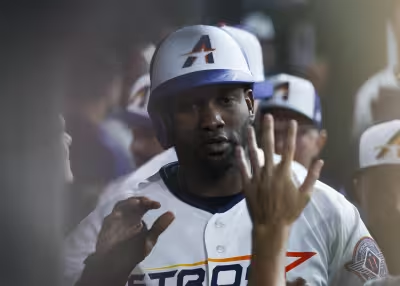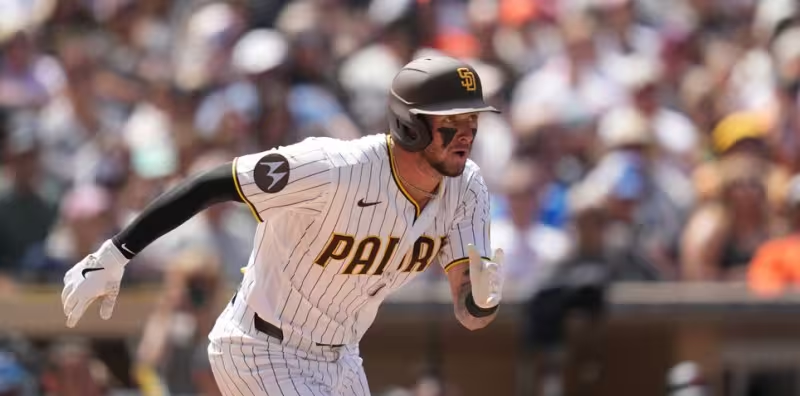
FanDuel’s latest home run betting piece for Friday 4/10/26 leans on matchup splits, and the board includes Bryce Harper, Matt Olson and Jackson Merrill. The article also notes that MLB odds can move during the day and that an HR prop still counts if a player gets at least one at-bat, even as a pinch hitter.
Harper drew the strongest recommendation against Mike Soroka, who allowed 1.47 jacks per night to left-handed hitters in 2025 and 0.89 in righty-righty matchups. Harper posted a.425 wOBA and a 42.5% fly-ball rate at home against right-handers last season, with 11 homers in 165 plate appearances in that split, and he has opened this year with an expected wOBA of.380.



Olson, meanwhile, gets Slade Cecconi in a home game after opening with a.413 wOBA and three homers through his first 57 plate appearances. Cecconi gave up a 41.8% hard-hit rate, a 39.1% fly-ball rate and 1.72 home runs per nine innings to left-handed bats in 2025, while Olson hit 15 of his 29 homers at home versus right-handers last season and posted a.400 wOBA with a 40.5% hard-hit rate in that split. He has homered three times across his last seven games.
The third name on the board is Jackson Merrill, with a +210 line mentioned for the home run prop. Merrill posted a.359 wOBA and a 40.8% fly-ball rate against right-handed pitching last season, and 14 of his 16 home runs came with the platoon advantage. FanDuel also described Tomoyuki Sugano as one of the lesser arms on the board and said left-handed hitters have hit 1.99 homers per nine innings against him in his brief MLB career, along with a 38.5% fly-ball rate.
That is what makes the piece useful today: it is not a recap, but a snapshot of how one betting card is being built from hard splits and power indicators before the slate begins. The tension is in the numbers that do not line up cleanly — Soroka’s work against lefties is far worse than his righty-righty results, Olson’s early production has already been hot, and Merrill’s long-ball profile is being priced with a plus-money line. FanDuel’s framing leaves the bettor with the same basic job the market has: decide whether the matchup data is enough to pay for the shot at a home run.