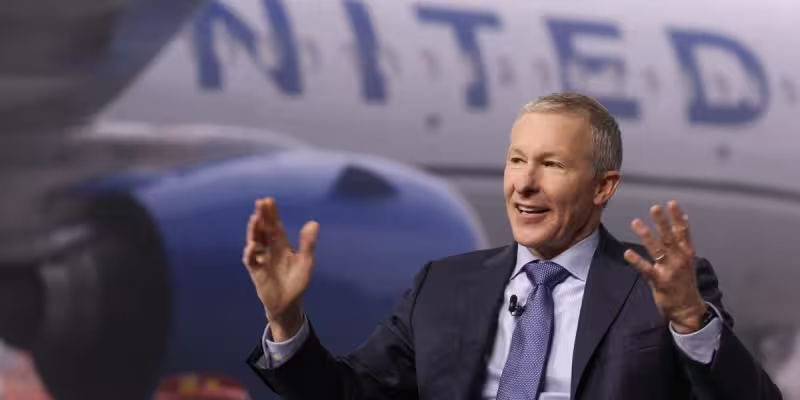
United Airlines chief executive Scott Kirby says the carrier gives a small group of pilots a veto over some job candidates, asking them to decide whether they would want to spend four days with the person. If the answer is no, Kirby said, the candidate is out.
Kirby described the process in a recent interview with McKinsey and Company, saying he asked the head of flight operations to choose a dozen pilots who were well-liked by everyone. Those pilots are told to judge whether each interviewee is someone they would want on a long trip, a test Kirby framed as a way to find people with the right mentality and customer service attitude. He said United Airlines is trying to hire for character as much as for skill.
The scale of the hiring challenge helps explain the approach. Kirby said United Airlines gets 75,000 applicants within hours when it opens flight attendant hiring for about 3,000 positions, a pace that works out to roughly a 4% acceptance rate. He also said the company is one of the few places left where workers without a college diploma can move across roles and still earn six-figure incomes.
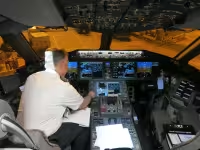
The pilot veto is only one layer of United Airlines’ broader hiring process. A company spokesperson said the step sits alongside standards set by the business and the FAA, underscoring that the final call is not left to personality alone. Kirby said the company can teach the job itself, but it still has to find people who care about others and remain excited about the work.
That idea echoes how other executives describe their own hiring instincts. Earlier this year, Duolingo co-founder Luis von Ahn said a candidate’s treatment of a driver on the way to the office can affect hiring decisions, and he said he once passed on a chief financial officer candidate after learning the person had been “pretty mean” to the driver from the airport. Khozema Shipchandler, meanwhile, said his biggest warning sign is when a candidate sits through a 45 minute dinner without asking questions. For Kirby, the point is not just to fill seats in the cockpit. It is to choose people who can carry the airline’s service culture every day, in a business where the wrong hire is hard to hide.
United Airlines has made that bet before, but Kirby’s remarks show how bluntly the company now talks about it. The unanswered question is how often a veto based on fit narrows the field before the best technical candidate ever gets a chance to finish the interview.