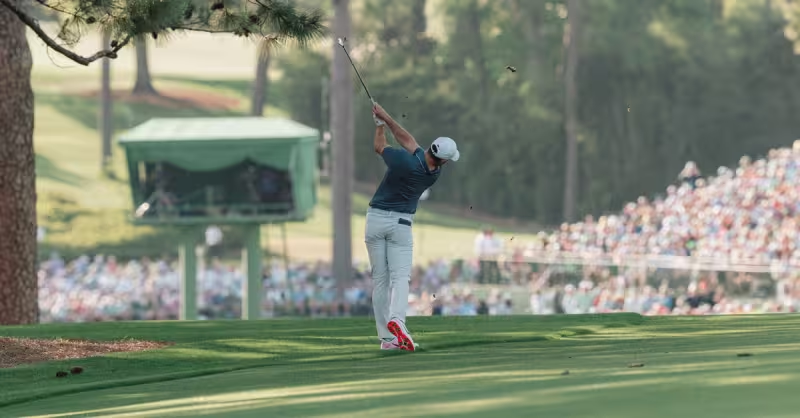
Gary Player won the 1978 Masters at age 42 after coming from seven shots down, and his finish remains one of the defining rallies in Augusta history. He made seven birdies in the last 10 holes, then rolled in a birdie putt on the final green that secured his ninth and final major.
The late charge mattered because it unfolded under pressure and on the back nine, the stretch where Masters fortunes tend to turn. Herb Green had just birdied 15 to take the outright lead at 11 under, and Tom Watson had birdied to get to 10 under, leaving Player with no room to wait. Vin Scully was on the microphone for the highlight that day, a fitting voice for a finish that moved from scramble to surge in a matter of holes.

That is why Augusta lists such shots carefully, and why its greatest-shot conversation is limited to the televised era of Masters coverage. Gene Sarazen's double eagle on 15 in 1935 remains one of the greatest shots in Masters history, but there is no footage of it for direct comparison. Louis Oosthuizen's double eagle in 2012 also belongs in the discussion, though it came early in the round and did not carry the same weight as a back-nine shot with the lead.
Read Also: Haotong Li opens at Augusta with 71 and eagle in Masters return
The same standard is what keeps Phil Mickelson's 2004 Sunday in the frame. He came to the 12th tee three strokes ahead of Ernie Els, who then made an eagle on 13, a reminder that Augusta's final stretch can change a tournament in one swing. Player's run, though, still stands apart for the size of the deficit, the number of birdies, and the fact that it finished with a putt that sealed his place in the record book.